About Me

My photo
A college created blog that shall follow all the courses I undertake on my apprenticeship. Comical, and terribly cringe-worthy mishaps are inevitable.
Showing posts with label Unit 2 (Certificate). Show all posts

Sunday, 27 November 2011

Unit 2 (Certificate), 3.1 - "Outline ways in which a media product might be understood by its audience."

Unit 2, 3.1 "Outline ways in which a media product might be understood by its audience."

An audience can respond to media products in completely different ways, and a good example of this is when the e4 hit show, Skins, aired a couple of years back, followed by the American version this year. While one was embraced with open arms, benefiting from it's 'controversial' status, the other was on the receiving end of a massive backlash from the media , parents, and the like.

The original Skins tapped into an audience that had originally been neglected on TV for American imports such as One Tree Hill and The O.C. Rather than being insanely-rich white teens, those cast in Skins - who also were, and looked their age - could be the person down the street, someone you knew, or even you. (Heightened for entertainment sake, of course.)

This is what made Skins such a success when it managed to clock up to 1.5 million viewers on the opening episode for the first series. The show found an audience that hadn't been expressed on TV before (especially on British television), and sold them a life style that could, and has been read, as being 'cool'.


Take a look at the first teaser trailer for series one. This advertising, to me, screams of - and plugs into - the teeange-cool that, when we're younger, aspire to on some level. The same 'cool' advertising has gone on for the last few years, causing a few complaints across the board. Being a teenager myself, and knowing how complaints of things such as the series 3 teaser trailer  introducing the new cast members isn't going to make people my age not watch the show - they'll be more intrigued because of it - thus contributing to this 'cool' factor, that even adults will agree with. This is one key way that Skins has been understood by its young audience who are at an important transitional stage in their life where they are finding out who they are, and are a lot more caring to trends/being cool than adults usually are.

Another point to make would be the fact that, you, the average Skins watcher, can go to open casting calls and attempt to live that life yourself, albeit fictionally, but as a main cast member; not just an extra.

Keeping on the line of Skins transcending off our TV screens and into real life, the 'must be cool' outlook has gone on to be adopted by fans of the show, who have hosted now-notorious 'Skins' parties, not including ones designed for the promotion of the series through those that make the show.

One thing that is interesting about the Skins format, is that, when the American remake aired earlier this year, audiences across the pond 'just didn't get it'.

MTV's own version of Skins was set out to rival the UK's, and hopefully tap into an audience they believed existed in the States, too.

However, the opposite happened when the US Skins aired. It had good viewing figures on its opening, but quickly turned into a travesty, thanks to much negative press. Yes, the show itself was even worse than e4's creation, but, the thing is, there just weren't enough people interested in the American version of the show, among another number of reasons causing it to be cancelled after one season. . It also caused a fair amount of controversy for a short-lived TV programme, too, which clearly contributed to it getting plugged. If advertisers  for the show didn't even support it, why should MTV?

The US Skins tried to attract an audience that just wasn't there. And, if it did have an audience, the controversy surrounding the programme didn't help it in anyway, unlike the UK counterpart. The saying 'all publicity is good publicity' may have worked in the UK, but it didn't in the US.

Oddly, the original Skins has done quite well on BBC America, but why? What is the difference between the two audiences?

We sometimes forget about culture divides when it comes to media products, especially with film, tv, and music, but there have been plenty of times when shows, films and music have been banned from certain countries due to their 'content' and the way they those audiences can look at something that may be, in most cases, too open when it comes to sex, drugs, violence etc.

I think this is one of the reasons why BBCAmerica continue to show the UK Skins, but the US Skins is no more. The American culture are a lot more happy to see another country, another culture, engage in the same acts as those in the US Skins did, but, if it comes down to portraying the lives of their own countries kids, it'll

As a British culture, we are a lot more open to those kind of topics (sex, drugs and violence), whereas Americans are - dare I say - more closeted. Here is a good example of one of the many people angered by Skins US, but more so to campaign against one of their advertisers, Clearasil, featuring on the ad breaks.

Many good points have been raised in this article that I have mentioned here in my own post (about the culture divide), but also the fact that, while UK audiences - which include parents - have come to realise that these kind of things go on with teenagers (they were once that age themselves), the US are almost trying to deny it, and would prefer their kids to be watching the likes of Jersey Shore, or something completely not-based in reality.

So, overall, and in answer to the question "Outline ways in which a media product might be understood by its audience", in this example, there are two main ways that an audience may understand a media product:

1) The UK Skins was understood by its young audience to be the new cool programme that depicted, realistically, the lives of British teenagers. The evidence of its success can be seen through the Skins parties, books, casting calls, and competitions.

2) The US Skins remake wasn't understood by the same audience the original was. Instead of being the realistic portrayal of American teenagers lives, the programme faced serious backlash and, clearly, not enough research went into thinking how US audiences would react to the UK's way of thinking teenagers acted in their day-to-day lives.

The audience the programme reached, instead, were angry media outlets and parents, and not the cool, young, fashionable youth that the UK Skins has attracted.  

Tuesday, 22 November 2011

Unit 2 (Certificate), 1.1 "Outline ways in which a media industry identifies audiences with its products"


Unit 2 Certificate, 1.1 - "Outline ways in which a media industry identifies audiences for its products."

Creative Media industries couldn't exist without us, the audience, consuming their products. But how do they know what kind of products to sell to certain demographics? From age, to race, to gender, to sexual orientation, we are pigeon holed into certain sections in society when it comes to what attracts buyers unfortunately, and this is the basis of most media industries. If they know the kinds of formula that works for a certain age for example, and it makes them a profit, they'll follow this formula while it is still producing revenue.


A perfect example of a way in which the media industry can identify its audience is through television. Audience measurement keeps an eye on all kinds of things when it comes to TV and who is watching what. The most interesting thing about measuring the kinds of viewers watching specific programmes is the demographic that is used (pasted as follows):


  • P2+ = Persons aged 2 or more
  • P12-34 = Persons aged 12 to 34
  • P18-49 = Persons aged 18 to 49
  • A18-34 = Adults aged 18 to 34
  • Men 18-34
  • Women 18-34

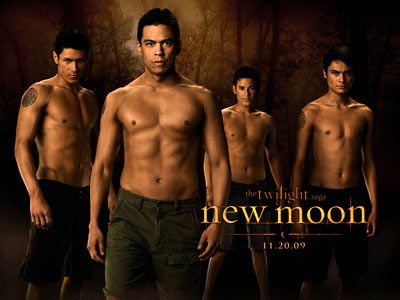
Another example of a way of identifying an audience for a product can come in the form of sales. Let's take the phenomenon that is Twilight, predominately, a book that has been read/is still read by pre-teen or teenage girls. Knowing this was the demographic for the saga, when the film versions of the books were released, the marketing for these adaptations were blatantly directed at this group. (See said poster below):


Sales of certain products, especially when it comes to considering adapting something for the big screen is important. On creative terms, you still want to attract that audience (because, at first, the fans are the ones who will be seeing the film), and on a commercial level, you want to attract those followers of the book/comic/whatever it is but still garner people who may not have necessarily heard of the original source material. 


Before social networking got to where it is today (something I am going to speak about in a minute), getting feedback through consumer questionaries was another way in which a media industry could identify an audience. 


These questionaries would take place usually face-to-face, but now, they can be done online as well.


Social networking is also another main aspect to how media industries identify audiences. Twitter and Facebook have become prominent in setting 'trends' and things that people 'like'. The more something is tweeted the higher it moves up the ranking on Twitter and becomes a 'trending topic'. The same method is used for 'liking' something on Facebook, too. 


All kinds of companies involved in different media industries are going to be searching these websites, seeing what is the 'hot' discussion topic, because they'll know that if something has become a trend, that is in fashion, it is a perfect thing to cash-in on because it is a free, easy way to find out what people are 'in to' at the moment.  


The thing about fashion is, it only sustains itself for a certain period of time before we end up moving onto something else. That is why companies such as those that work in advertising and so forth, will be checking these sites, seeing what kinds of people will buy into these things that they are speaking about, and figure out how to play this into a profitable product. 

Unit 2 Certificate, 2.1 - "Outline ways in which a media product is constructed for a specific audience."


Unit 2 Certificate, 2.1 - "Outline ways in which a media product is constructed for a specific audience."


When thinking of a product, the first thing that should pop into your head - even if the money side/making profit doesn't cross your mind - should be, 'Who is this for?'. Even if something is meant for you and only you, if you want the chance to get it out there in the world, you'll have to find your market and that audience, even if it only consists of one person. 

There are a fair few ways in which a media product is constructed for a specific audience. Because there are so many different things that can affect a product (from gender, to age, to nationality), no matter how much I dislike that industries carve out a particular product to sell to a market that will include a certain 'type' of person, it happens. 


I'm going to hone in on an audience in particular, one, I believe, I know a little bit about - teenage girls.

Before I speak about a certain media product that has been shaped for this age group, a person that has, without doubt, been moulded for this target market is Justin Bieber. Love him, hate him, or don't really care about him, he has been around for a while now, and though he himself can't be considered a media product (only a product of the media), there are a fair few things that his name has been attached to that screams of targeting his girl-filled audience.

Excuse the nail varnish line, weird perfume, and his selection of dolls, Justin Bieber, to me, is mostly known for releasing puppy-dog radio-and-mother-friendly music, putting him in the position of being seen as a tad cooler than the Disney kids, but not quite. 


Though he is only a few albums into his career (most of which are remixes), the media frenzy around him has already been in full swing for the last few years, and doesn't look like it is calming down any time soon. 

So what does Justin Bieber have to do with the construction of a media product? Well, his most recent album release, Under the Mistletoe, is the perfect example of a product aimed straight at a specific audience, and I shall tell you why.

I think we're all in the know about the Christmas season being heavy on the spending, and  the time when parents will fork out a fair bit of money to buy presents for the kids. Justin Bieber has been molded for the pre-teen and early teenaged girl age bracket, the age group that don't have their own money coming their way, but instead, are at the disposal of their parents much-bigger income.


What is the clincher for me when it comes to this release is that Bieber is donating 'some' of the proceeds to a charity. Yes, the kid that is worth nearly a $100 million could have gone all out and donated all of the earnings of the album to a charity of his choice (with some, naturally, going to his record company because they couldn't possibly need more money than they already have) - but no. Still, the ringing of 'charity' along with 'Christmas' in any mother's ears will make it even more of an easy sell for the album.


No matter the cheap cash-in that some have mentioned this album obviously is, the perfectly-pitched marketing from Team Bieber is too good to ignore. 

Though others - i.e fans - may disagree with the statement I am about to give, it all seems even more obvious than usual that Bieber is practically a musical cash-cow. So, the teen-sensation releases an album around the time, in terms of money, people are more 'giving', and parents are willing to adhere to this because it is all in the vain of Christmas, and more so for a festive-themed album, and people don't bat an eyelash? Even if  family, parents, friends etc. aren't willing to fork out the cash before December, the fact that the album is shoved full of Christmas songs makes it a kind of must-buy for the 25th. Plus, on top of this, it has been a while (for the patience of teenage girls anyway) when Bieber last released new music, leaving more anticipation for anything music-related from the 17 year old. Thinking about Under the Mistletoe now, there isn't that much difference from when the remix album of Bieber's documentary Never Say Never stormed the box office. Seeing a pattern here?


Christmas-themed albums have always done well in the charts, particularly for publicised pop-artists, and Bieber is one of the many who have lined up on the success that comes with season albums, managing to shift over 210,000 units (copies) of Under the Mistletoe in its first week of release. I'm sure the album will be selling plenty more copies come December.