About Me

My photo
A college created blog that shall follow all the courses I undertake on my apprenticeship. Comical, and terribly cringe-worthy mishaps are inevitable.

Thursday, 5 January 2012

Unit 10, 2.1 - "Describe the differences between hazards and risks"

Unit 10, 2.1 - "Describe the differences between hazards and risks."

There are a few key differences between hazards and risks, which I have described below:

HAZARD

A hazard is something that can cause you physical or mental harm, whether that be through stress or dangerous chemicals.

RISK

A risk is how great the chance is that a hazard will potentially harm someone. It will usually be rated on a low, medium and high scale. 

Unit 10, 1.3 - "Describe the main employer responsibilities under the Health and Safety at Work Act."

Unit 10, 1. 3 -"Describe the main employer responsibilities under the Health and Safety at Work Act"

While employees have responsibilities to adhere to when it comes to the Health and Safety at Work Act, employers also have to follow the act, too, which is included in a contract that both employers and employees have to sign.

The main responsibilities that an employer has to work by under their own section of the Health and Safety at Work Act are the following:


1) It shall be the duty of the employer to ensure, so as far as reasonably practicable, the health, safety and welfare at work of all his employees.

This means that the employer is responsible for the welfare, health and safety wise, of their employees, within reason.

2) Without prejudice to the generality of an employer’s duty under the preceding subsection, the matters to which that duty extends include in particular— 

(a) the provision and maintenance of plant and systems of work that are, so far as is reasonably practicable, safe and without risks to health;

'Plant and systems of work' mean any equipment that is supplied by the organisation/employee need to be safe to use for the employee or anyone else. 

(b) arrangements for ensuring, so far as is reasonably practicable, safety and absence of risks to health in connection with the use, handling, storage and transport of articles and substances;

An employer mustn't put their employees at risk in regards to any physical means of work. 

(c) the provision of such information, instruction, training and supervision as is necessary to ensure, so far as is reasonably practicable, the health and safety at work of his employees;

For the safety of the said employee/s, the employer must ensure that health and safety information is available, while instructing the employee/s where necessary, and making sure that training is provided, along with supervision if needed to carry out a particular task.

(d) so far as is reasonably practicable as regards any place of work under the employer’s control, the maintenance of it in a condition that is safe and without risks to health and the provision and maintenance of means of access to and egress from it that are safe and without such risks;

All places of work must be maintained at a standard that is 'safe and without risks to health'. 

(e) the provision and maintenance of a working environment for his employees that is, so far as is reasonably practicable, safe, without risks to health, and adequate as regards facilities and arrangements for their welfare at work.

The working environment for the employee/s must be work-friendly in terms of safety. There should be facilities around if something were to go wrong (fire extinguishers for example) and arrangements made in case of a situation (fire drills, as another example). 

3) Except in such cases as may be prescribed, it shall be the duty of every employer to prepare and as often as may be appropriate, revise a written statement of his general policy with respect to the health and safety at work of his employees and the organisation and arrangements for the time being in force for carrying out that policy, and to bring the statement and any revision of it to notice of all his employees. 

Part 3 states that an employer must revise (where necessary) their general written statement policy regarding health and safety at work for their employers. Whatever organisation it may be must carry out these changes in the policy. If there is anything out of place with the written statement used, it must be brought to the attention of the employees at the organisation. 

4) Regulations made by the Secretary of State may provide for the appointment in prescribed cases by recognised trade unions (within the meaning of the regulations) of safety representatives from amongst the employees, and those representatives shall represent the employees in consultations with the employers under subsection (6) below and shall have such other functions as may be prescribed.

The Secretary of State in the United Kingdom can be a number of people who are in charge of the the Government Department of the country. The most well known Secretary of State is the Prime Minister.

The safety representative will be someone who is employed in the organisation to make sure health and safety rules are followed, and that all employees remain protected. 

5) (a section to sign)

6) It shall be the duty of every employer to consult any such representatives with a view to the making and maintenance of arrangements which will enable him and his employees to co-operate effectively in promoting and developing measures to ensure the health and safety at work of the employees, and in checking the effectiveness of such measures.

An employer must converse with any of the safety representatives to arrange (and ensure) the health and safety at work of the employee/s, making sure that these changes are effective. 


7) In such cases as may be prescribed it shall be the duty of every employer, if requested to do so by the safety representatives mentioned in [F2subsection (4)] above, to establish, in accordance with regulations made by the Secretary of State, a safety committee having the function of keeping under review the measures taken to ensure the health and safety at work of his employees and such other functions as may be prescribed.

The laws made by the Secretary of State in regards to health and safety in the work place need to be adhered to by both the employer and representative, keeping all in employees safe in the process. 


Wednesday, 4 January 2012

Unit 4, 2.1 - 2.5

Unit 4, 2.1 - "Describe effective time management skills needed to plan workload."


Knowing how to manage your time effectively is a skill that is invaluable when it comes down to planning your workload.

Time management skills that would be needed for planning a workload can range from a number of things, but most importantly, to ensure a smooth-running plan, it is all about learning, and carrying out, the following:

1) Being aware of what needs to be completed.

2) Setting out a plan of what you are going to do when/where, etc.

3) Going through your plan, one by one, and completing the tasks (remembering to keep note of what you have done and what is left to finish.)

Unit 4, 2.2 - "Describe how to specify and agree timescales, budgets and resources."


Working out what the project at hand is of first importance before agreeing timescales, budgets and resources. Once you are aware of the project, then, you are able to fulfill the rest of the criteria needed.

Ask yourself these questions:

Timescale - How long will it take for you to complete the task, and when does it need to be completed?

Budgets - Do I need anything for the task, and, if so, how much will it cost?

Resources - What will you need to complete the task?

One important task I had to carry out as an apprentice for my appointed company was to get a Digibeta copy of our film, along with a selection of photographic stills stored on some-kind of portable hard drive.

Firstly, I identified the timescale I had to do this in. The package had to be in Germany by the end of the week, and I was asked to do this task on Tuesday night, to begin on Wednesday morning, so it was of utmost importance.

Secondly, I noted that the stills for the film also needed to be transported with the Digibeta copy, so, once I tried to copy the photos to a DVD and that didn't work, I instead used a 4GB USB to store them on. This meant that I went over my estimated budget of £10 for the storage of the photos, but in certain situations like this one, it was needed.

For the second part of the budget (sending the tape and the stills) I estimated around £50 in total for the shipping of the package.

Lastly, for the resources part of the task, I needed someone to be able to send the package to Germany for it to be delivered the next day. Here, I noted that the best place in order to complete my task would be the post office, and so the package was sent through Royal Mail for a next day delivery.

Unit 4, 2.3 - "Explain how to construct a simple project plan."

Constructing a project plan is easy to do once you know how. There are certain criteria that should be followed to determine a simple-to-follow plan, but also one that is effective.

To explain how to set up a project plan, the example I am going to give is all about sourcing, and gaining, the information needed to set up your companies website. This was a task I was set to do at my company, and one that was pretty important for the re-design and launch of our website.

1) Understanding the brief you have been tasked seems to be obvious, but a lot of the time we don't listen or read the brief at hand. For this example, I needed to fish out photographs free-of-copyright that could be used on the site for specific in-development features.

2) Like effectively managing your workload, constructing a simple project plan is no different - you need to be aware of what needs to be completed, the timescale that the project given to you has been set for completion, if there are budgets, and what are the resources that are required from you or anyone else. The more information you are aware of, the easier it will be to complete the task in the end. I had to ask what sort of photos I needed to get for each film, as all of them dealt with different themes and I couldn't find a picture of a rabbit and stick it with a horror film - it would be totally irrelevant and would defeat the purpose of what we were trying to portray for that particular film.

3) Once you are aware of all these details, it is time to make yourself a physical version of your project plan, so you have something to go back and forth to. You can use Word, Excel, or any other program that will enable you to build tables - whatever works for you, really, as long as you have some kind of reference for your project.

4) List out the requirements from you, your timescale, budgets (if any) and resources. Having an electronic version of your project plan will definitely help in the long-run. As you go along, you can update this in accordance to how much you have achieved so far. 

5) Finally, on the project plan, add any other key issues that you need to. I jotted down the kinds of photos I needed for a particular film, so I wouldn't forget. I also got a few reference images to help me out (ones that were copyrighted) and added a number of free stock image sites to look at.

And there you have it, a quick guide that clearly demonstrates how to make a simple project plan. It is best to remember that, when viewing a plan such as this, it works in a more effective way than a list - with just a little bit more thought gone into it!

2.4 "Explain the use of a contingency plan"

A contingency plan is (in other words) a pre-prepared plan that would have been instigated in case something goes wrong on in a certain situation. This can span from something as simple as a particular person not being able to come into work, or a missing production card on a shoot of a film.

The use of a contingency plan  and to have one in place, is important because it is never a 100% bet that everything will run smoothly, whatever the situation is. Though it is only in particular circumstances where a contingency plan would have to be used, there is nothing wrong with setting one up for the off-chance that something doesn't go according to the original plan. 

2.5 "Explain the importance of storing work, using version control and observing file naming conventions." 


It is important, when storing work, to use version control (basically the changes that have been made on your computer, whether that is the history or downloading a massive software package) and observing file naming conventions.

Conventions are usually there for a purpose, as, when storing your work, there are certain key words that can be remembered, and version control can keep track of these.

I've come across the problem in and outside of work where I have saved a document someone had sent to me, without finding the correct file it needed to go into, or changing the title of the document. At a later stage, when trying to search for this document, it was impossible because I couldn't remember what I had saved it under, and where. You can't rely on Windows XP's search engine to find a document for you - you should know where you placed it to save yourself, and others, a lot of valuable time.

It's best to be over-organised than under-organised and noting what file naming conventions are makes it so much easier for you or anyone else to look for a particular document.

Unit 3, 1.2 "Describe key Intellectual Property and copyright issues, related to digital technology and content creation."

Unit 3, 1.2 - "Describe key Intellectual Property and copyright issues, related to digital technology and content creation."

There are four key issues that come to mind when I think of Intellectual Property and copyright issues relating to digital technology and content creation in the creative media industry. Here, I have listed them:

SHARING

iTunes is a perfect example of a website and program that will let you download music, TV shows, films and games for a fixed price. But what happens when you share these files - for free - to your friends, family and/or colleagues?

Legally, we are not allowed to share files we have paid for to other people, but there are currently no restrictions in us doing so, particularly on such a successful site as iTunes.

There are even freeware programs that will happily let you share iTunes music for no cost, and it would be wrong for me to deny that I have sent people songs through such social networking tools as MSN and Skype that I've purchased.

The continuation of this problem links into the next key issue that I'm going to describe - piracy.

PIRACY

2009 finally showed the film industry that piracy should be a massive concern, not just within film, but the whole creative media sector.

X-Men Origins: Wolverine was a film set for success (and it did well at the box office, but the amount of money it lost is undeniably great) as one of the biggest blockbusters of the year. That was until an unfinished version of the film was leaked a month before its release date.

This incident caused the film to be downloaded 4.5 million times before the actual release date, losing Fox (the studio distributing the film) an estimated $20 million in the process.
As with sharing, it is very unlikely that piracy is going to die down anytime soon, making it another copyright issue related to digital technology.

COPYRIGHT INFRINGEMENT 


Back in 2010, pop-group The Black Eyed Peas were sued for not one, but two copyright right infringement law-suits concerning two their hit songs 'I Gotta Feeling' and 'Boom Boom Pow'.

The music industry is no stranger to these kinds of scandals, though - they happen all the time - and they certainly aren't helping themselves when it comes to sampling tracks on other songs, particularly in the hip-hop genre.

When you use a sample of a song to create your own content, no matter what respect the sample is being used for, it is important that you get the rights to the song before you do anything. This is something that Jay-Z and Kanye failed to do on their duo album Watch the Throne, and will now have to face the consequences for. This could mean a number of things, such as not being able to perform their track 'The Joy' in public because they haven't gained the copyright clearances for the sample, or even removing the song from their album.

PLAGIARISM 

It is a common mistake to confuse plagiarism and copyright infringement as one in the same thing. The most important aspect about copyright infringement to remember is that the original author of the idea/product is protected by the law. If anyone steals the specified work or idea, there will be serious legal consequences to adhere too.

With plagiarism it technically isn't illegal - though it is extremely unethical - to take someone else's ideas/work and present them as your own (thus falling under an intellectual property issue). A prime example of this occurring in the creative media industry is the game, Limb of the Lost.

Released in 2008, it didn't take long until the similarities in Limbo of the Lost with other successful gaming and film franchises were spotted. There is one thing to take inspiration from other sources, but it is a different story to make your product identical to an already existing material (which is what Limbo of the Lost did when those involved made the game almost identical to The Elder Scrolls IV: Oblivion and Thief: Deadly Shadows).

The reason why this case is plagiarism and not copyright infringement is because the game was repackaged and sold as a completely different product, something that had no connection to The Elder Scrolls IV: Oblivion and Thief: Deadly Shadows.


Unit 3, 4.2 "Research and plan a test for an identified opportunity."

Unit 3, 4.2 - "Research and plan a test for an identified opportunity."


One of the things I have found that many people (including myself) do when they go for their daily-shower is sing. Admittedly, everyone has sung to themselves in the shower at least once. It's where we can belt out embarrassing tunes without fearing we'll be overheard by anyone else we live with.


Karaoke is extremely popular worldwide, particularly in Japan where they have their own bars dedicated to karaoke singing.


Singing along to pop songs has moved away from singling themselves out for those on a night out, too. Games like Singstar have proved just how successful karaoke can be in your home, as well. 


So, I thought, why not combine the two? Not only will you be able to keep yourself squeaky clean, but you can sing along to real songs in the process!


First things first, though - does a shower karaoke machine already exist? To make sure it didn't, I carried out my research online into the product.


The findings of my research proved that my idea isn't already a product, but also, the first two searches on Google when I typed 'shower karaoke machines' were articles wishing that a shower karaoke machine was in existence:


Example 1


Example 2


Of course this isn't solid evidence in finding out if I have identified an opportunity in the creative media market with my product, so, I have made the following form that my fellow apprentices (or anyone else) would fill out once I have pitched my idea, grading my product in terms of its pros, cons, and if it were to exist, would they buy it?


Converging media product pitch unit 4, 4.2

View more documents from CherokeeSS.

Friday, 2 December 2011

Unit 3, 1.1 "Describe the uses of digital technology within the Creative Media sector and the relationships this has created between industries in the sector."

Unit 3, 1.1 "Describe the uses of digital technology within the Creative Media sector and the relationships this has created between industries in the sector."

Digital technology plays a major part in our personal and mostly everyone's professional lives. With this, many digital technologies have been created for the purpose of using Creative Media sector environments. 

These can range from the following technologies below, mostly used for the film industry, but I will get into the relationships that these have created between other industries in the sector:

Final Draft  

Final Draft is a scriptwriting software that has been used by many prolific screenwriters and directors, one of which is Hollywood writer/director JJ. Abrams, responsible for the Star Trek reboot, Super 8 and TV show, Lost. 

Celtx is the most popular free-option when it comes to scriptwriting, and can pretty much do the same things that Final Draft can, without you having to pay for it.

Most industry professionals use Final Draft, but for those starting out with little money, Celtx is an easy, affordable option.


Final Cut Pro/Studio

Final Cut Pro is a video editing software tool, and, like Final Draft, is used by a lot of industry professionals. The most notable film that has been edited using Final Cut Pro is The Social Network, which, incidentally, won the Best Editing Oscar last year.


Software similar to Final Cut Pro - that is free - is probably the most difficult to come by because it is such a niche, and controlled program, that, I think, is worth forking out the money for if you are serious about editing work.

iMovie and Windows Movie Maker are both free editing softwares, but two that can only do the basis of editing; nothing close to the scope that Final Cut Pro has. 

Photoshop

Originally used for photography, Photoshop is a photographic editing software. I find it very hard to come across someone now that hasn't at least used Photoshop once, or knows the basics to it. 

Free options to Photoshop include iPhoto, Pixlr and Paint, but, while Celtx can pretty much do the same things that Final Draft can, Photoshop is by far the bigger, and more advanced software out of the ones I've mentioned.

So, yes, it is a good thing that all these kinds of technologies exist, as it enables other industries to use these tools, too, not just Film and Photography industries (the two which I have mentioned, above). 

Final Draft has the ability to transcend into the music and TV industries, as well. The format for a script remains the same even if you are writing for a music video or a TV show. 

Celtx, the free rival of Final Draft, let's you write comics as well, something that Final Draft is incapable of doing. 

The same can be said for Final Cut Pro, which doesn't just need to be editing software for film. Music videos and TV shows can get on in the act, too. This doesn't mean to see that animations can't be edited on Final Cut Pro, because they can. The most obvious example of this is, though it was the film version, is The Simpsons Movie.

iMovie and Windows Movie Maker are usually used for personal videos, but they can also, like Final Cut Pro, be used for other editing means. 

Photoshop started off as being used for editing photos, but has quickly become a graphic designing and artist tool, as well, leading onto all these other kinds of free photo-editing softwares where you can draw and design graphics.

While these tools are a good thing for the Creative Media sector, as it makes it more accessible to everyone and not just industry professionals, this can also be viewed as an issue as well. The accessibility of these tools mean that a lot of work for certain companies can be done in-house rather than hiring people from the outside to do task.

A good example of this occurring is with The National Theatre. Most of their work, if not all of their work, is done in-house. Something that my fellow apprentices and I learned when we visited The National was the figures of how many people they employ, which are well over 1,000.

This means that there are many departments in the theatre, which include writing, costume and editing. One of those departments, design, apparently didn't exist a few years back. In order to get designs for their posters, flyers, and anything else that needed design-work done, The National would go out-of-house and hire the people they needed to do the work.

Now, because they have an in-house design department to go to when they need anything design-related done, The National have managed to cut-costs. It is always cheaper to do work in-house (where you can reap the profits) then go to someone out-of-house and probably end up spending more money on the same design work you would have gotten in your own company. 

While the digital technologies I listed have created an open world in terms of who can start editing, writing, designing and so on, this also means that places like The National will already have people in-house to do these jobs, thus creating less work for people that aren't involved with successful companies like The National, in other industries. 

Monday, 28 November 2011

Unit 6 (Diploma), 1.2 - "Outline key hazards and risks in own workplace, describing safe working practices."


Unit 6 (Diploma), 1.2 - "Outline key hazards and risks in own workplace, describing safe working practices."

My work place, like all the other apprentices on this course,  is situated in an office. And like a few other apprentices, too, my office is a very small, production-based set-up, so, in a way, it is more down to me to deal with all the possible health and safety risks, and then hazards that may arise on the job.

Because the office is small, there is a lot of wiring crossing the floor, which, before I intervened, could have easily been a tripping hazard. A lot of plugs remained near things like our water cooler and fridge, for example. 

To keep the wiring contained, I used cable protectors that we have in the office. This automatically reduces the risk of anyone tripping over the wiring we have in the office as it is a tool that has been specifically designed for such things, but also, protects the wires from being damaged, too.

In order to keep the plugs away from substances that could be a serious hazard, particularly for electrical substances (water), I organised the plugs, added many extension leads, and specifically made sure that as many plugs as possible were kept well away from the water cooler and fridge without being another risk in itself. 

We also have a section of the office, far away from our eating area (where the fridge, microwave, kettle, water cooler and cutlery) is, were all our chemicals are, which includes cleaning equipment and cleaning utensils.

Though a lot of people forget this, it is very important to keep dangerous chemicals away from food, as, even spraying a bottle of something in the area of where you are eating can be room for concern. It is always good to remain alert to these things, not just health and safety risks that may seem more obvious at first (like the wiring).

18.1, 3.1 - "Produce a website with some assistance."

18.1, 3.1 - "Produce a website with some assistance."

The blog you are now reading this post on, Cherokee Media, was created at the beginning of my course back in April, and I have been updating it with my units ever since.

I also, in May of this year, created a sort-of accompanying 'website' in the shape of Feminising Film.

The assistance I had in for these sites was to get one of my friends to design both of the headers I have used, and also suggest the kind of layout and HTML style I should have on the blog, which I have edited. 

Sunday, 27 November 2011

Unit 2 (Certificate), 3.1 - "Outline ways in which a media product might be understood by its audience."

Unit 2, 3.1 "Outline ways in which a media product might be understood by its audience."

An audience can respond to media products in completely different ways, and a good example of this is when the e4 hit show, Skins, aired a couple of years back, followed by the American version this year. While one was embraced with open arms, benefiting from it's 'controversial' status, the other was on the receiving end of a massive backlash from the media , parents, and the like.

The original Skins tapped into an audience that had originally been neglected on TV for American imports such as One Tree Hill and The O.C. Rather than being insanely-rich white teens, those cast in Skins - who also were, and looked their age - could be the person down the street, someone you knew, or even you. (Heightened for entertainment sake, of course.)

This is what made Skins such a success when it managed to clock up to 1.5 million viewers on the opening episode for the first series. The show found an audience that hadn't been expressed on TV before (especially on British television), and sold them a life style that could, and has been read, as being 'cool'.


Take a look at the first teaser trailer for series one. This advertising, to me, screams of - and plugs into - the teeange-cool that, when we're younger, aspire to on some level. The same 'cool' advertising has gone on for the last few years, causing a few complaints across the board. Being a teenager myself, and knowing how complaints of things such as the series 3 teaser trailer  introducing the new cast members isn't going to make people my age not watch the show - they'll be more intrigued because of it - thus contributing to this 'cool' factor, that even adults will agree with. This is one key way that Skins has been understood by its young audience who are at an important transitional stage in their life where they are finding out who they are, and are a lot more caring to trends/being cool than adults usually are.

Another point to make would be the fact that, you, the average Skins watcher, can go to open casting calls and attempt to live that life yourself, albeit fictionally, but as a main cast member; not just an extra.

Keeping on the line of Skins transcending off our TV screens and into real life, the 'must be cool' outlook has gone on to be adopted by fans of the show, who have hosted now-notorious 'Skins' parties, not including ones designed for the promotion of the series through those that make the show.

One thing that is interesting about the Skins format, is that, when the American remake aired earlier this year, audiences across the pond 'just didn't get it'.

MTV's own version of Skins was set out to rival the UK's, and hopefully tap into an audience they believed existed in the States, too.

However, the opposite happened when the US Skins aired. It had good viewing figures on its opening, but quickly turned into a travesty, thanks to much negative press. Yes, the show itself was even worse than e4's creation, but, the thing is, there just weren't enough people interested in the American version of the show, among another number of reasons causing it to be cancelled after one season. . It also caused a fair amount of controversy for a short-lived TV programme, too, which clearly contributed to it getting plugged. If advertisers  for the show didn't even support it, why should MTV?

The US Skins tried to attract an audience that just wasn't there. And, if it did have an audience, the controversy surrounding the programme didn't help it in anyway, unlike the UK counterpart. The saying 'all publicity is good publicity' may have worked in the UK, but it didn't in the US.

Oddly, the original Skins has done quite well on BBC America, but why? What is the difference between the two audiences?

We sometimes forget about culture divides when it comes to media products, especially with film, tv, and music, but there have been plenty of times when shows, films and music have been banned from certain countries due to their 'content' and the way they those audiences can look at something that may be, in most cases, too open when it comes to sex, drugs, violence etc.

I think this is one of the reasons why BBCAmerica continue to show the UK Skins, but the US Skins is no more. The American culture are a lot more happy to see another country, another culture, engage in the same acts as those in the US Skins did, but, if it comes down to portraying the lives of their own countries kids, it'll

As a British culture, we are a lot more open to those kind of topics (sex, drugs and violence), whereas Americans are - dare I say - more closeted. Here is a good example of one of the many people angered by Skins US, but more so to campaign against one of their advertisers, Clearasil, featuring on the ad breaks.

Many good points have been raised in this article that I have mentioned here in my own post (about the culture divide), but also the fact that, while UK audiences - which include parents - have come to realise that these kind of things go on with teenagers (they were once that age themselves), the US are almost trying to deny it, and would prefer their kids to be watching the likes of Jersey Shore, or something completely not-based in reality.

So, overall, and in answer to the question "Outline ways in which a media product might be understood by its audience", in this example, there are two main ways that an audience may understand a media product:

1) The UK Skins was understood by its young audience to be the new cool programme that depicted, realistically, the lives of British teenagers. The evidence of its success can be seen through the Skins parties, books, casting calls, and competitions.

2) The US Skins remake wasn't understood by the same audience the original was. Instead of being the realistic portrayal of American teenagers lives, the programme faced serious backlash and, clearly, not enough research went into thinking how US audiences would react to the UK's way of thinking teenagers acted in their day-to-day lives.

The audience the programme reached, instead, were angry media outlets and parents, and not the cool, young, fashionable youth that the UK Skins has attracted.  

Friday, 25 November 2011

Unit 5 (Certificate), 3.1 "Use appropriate research methods and techniques to carry out research for a proposed media production" and 4.1 "Present research results."

The proposed media production that I am going to carry out research for is an idea for a film that I thought up a couple of years ago, using Google (search engine) and Youtube (website) as my main sources of research.

In the vain of David Lynch's surrealist vibe, the film, Someone to Watch Over me (named after an Ella Fitzgerald song), takes place in the 1930s, with a noir/ Femme Fatale feel running through it. The story centres around a woman and dancer, Frances, who witnesses the murder of a man at the beginning of the film. We then are guided through the story of how she ended up at that place, where the man was murdered, (a hotel in New York City), which turns out, it was a place she had been performing nightly with her dancing troupe. However, things are, as always, not what it seems, and the question remains in our minds whether what she is telling us is the truth (we get two versions of the film and the events that took place).

As a part of my research for this proposed media production (my film idea) I have listed a couple of actors, style of locations, costumes and music that could be used for the film. 


Actors:

                                                               Joseph Gordon-Levitt 

                                                                   Carrie-Anne Moss


Naomi Watts 


The reason for the selection of these particular actors boils down to what they have previously starred in, and the audience that would be attracted to a film like this.

Firstly, when thinking about the audience for the film, though it would be geared towards the independent cinema-goers who are more used to non-straight forward narratives, the success of films such as Black Swan over the past year have made a gateway to independent cinema that can branch out and make money, albeit not on a Hollywood level, but to make a decent profit. 

Having actors that are recognisable to both the mainstream and independent audience would also help the film's profile, which is something I thought about when conducting the research for the actors I have listed. 

Joseph Gordon Levitt has starred in the crime/noir thriller Brick, while also playing a major role in the trippy-Hollywood blockbuster, Inception. Both of these kind of genres are themes that I had been intending to try and evoke with Someone to Watch Over Me, and, for audiences, he would be recognisble from not only a commercial level, but an independent one too. 

Carrie Anne-Moss hasn't been anything notable of recent times, but she was a lead character in the game-changer (and one of the many films that inspired Inception) The Matrix, and the surreal mind-bender Memento. Like Joseph Gordon Levitt, her appearance in the film would benefit it on a commercial and independent level as she is not an unknown to audiences. 

For David Lynch fans, Naomi Watts will be remembered for her performance in Mulholland Drive back in 2001. She has been in many high profiled films since then such as King Kong, and has worked for prolific directors like Woody Allen and Clint Eastwood. Out of all the other actors listed here, because the film is going straight for a David Lynch-inspired vibe, Naomi Watts would be the perfect gateway into getting the audience that this film would attract. 

Costumes:


Music:


Setting:

Why the period setting? Well, we're all aware that period films, particularly in the British film industry, is something that we are notoriously good at. Take The King's Speech for example, a period film that became a blockbuster smash. Though Someone to Watch Over Me wouldn't tap into the wide audience that The King's Speech did, the period setting, I believe, would definitely cause intrigue for the audience that I am trying to attract, and would also benefit the story on a stylistic level, too. 


Box office takings:

The one thing that a lot of independent films struggle to do is make their money back. Over recent years, though, independent cinema has proved to break through the mainstream.

See a list of independent films I have made below, that, even with similar themes to Someone to Watch Over Me, have been able to make their money  back at the box office. 


Black Swan

Year: 2011 (UK release)

Star power: Natalie Portman, Vincent Cassel, Mila Kunis, Barbra Hershey and Winona Ryder

Themes: Psychological, Surreal

Budget: $13 million

Gross (worldwide): $329, 398, 046

Reference: Box Office Mojo


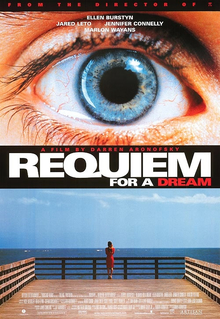
Requiem for a Dream

Year: 2000 (UK release)

Star power: Jared Leto, Jennifer Connelly, Ellen Burstyn and Marlon Wayans

Themes: Psychological

Budget: $4.5 million

Gross (worldwide): $,7,390,108

Reference: Box Office Mojo and Wikipedia 


Mulholland Drive

Year: 2002 (UK release)

Star Power: Naomi Watts, Laura Harring and Justin Theroux

Themes: Psychological, Surreal, Non-linear narrative

Budget: $15 million

Gross (worldwide): $20,117,339

Reference: Box Office Mojo and Wikipedia


The Tree of Life

Year: 2011 (UK release)

Star power: Brad Pitt, Sean Penn and Jessica Chastain

Themes: Non-linear narrative, surreal 

Budget: $32 million 

Gross (worldwide): $54,303,319

Reference: Box Office Mojo


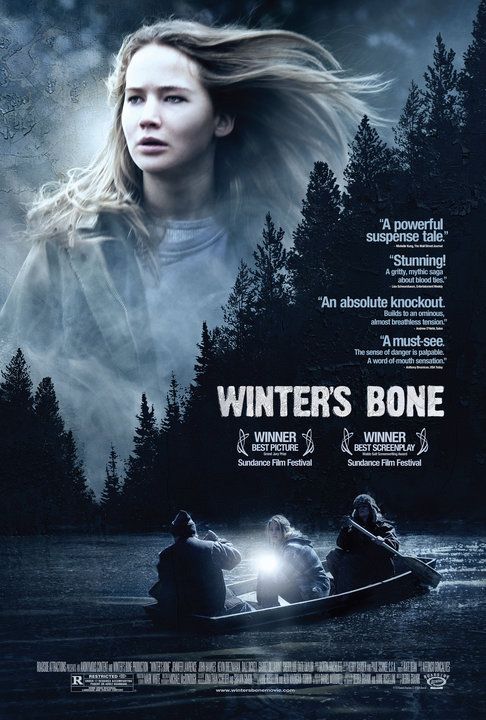
Winters Bone

Year: 2010 (UK release)

Star power: Jennifer Lawrence and John Hawkes

Themes: Crime, Neo-noir

Budget: $2 million

Gross (worldwide): $13,831,503

Reference: Box Office Mojo 


So, to round up Unit 5 3.1 and 4.1, I believe I have been able to demonstrate that I can use appropriate research methods (the internet) and techniques (searching key words such as Mulholland Drive box office gross into Google) to gather my research. 

On top of this, I have been able to present my findings through a detailed list of actors, music, costumes, settings for the proposed production, and to back up how I believe the film would be able to earn its budget back, have selected successful (money wise, and critical) independent films over the past 12 years that deal with similar themes. 

Unit 5 (Certificate), 1.1 "Outline research methods and techniques."

Unit 5 (Certificate), 1.1 - "Outline research methods and techniques."

There are many researching methods and techniques that can be used when you are trying to source something out. These can range from using what you are probably reading this on now (the internet) to the old fashioned non-digital ways.

I have outlined some ways that you can go about researching whatever you need to find information on:

Internet search engines:

There are a number of search engines we have the choice of using. Yahoo and Bing are two of the competing engines to the internet world. The one search engine that I know I use on a daily basis, and one that the majority of the internet-using world have on their computer is Google *stats here.


Social networking sites: 

Social networking sites are a great tool for researching, too. I have found many things through our work Twitter feed (particularly when it came to London riot bulletins), and, of course, Facebook.

The problem with social networking is, that, it is a lot like Chinese whispers, and you can't take everything that is said seriously.

An example of this is when both Justin Bieber and Kanye West  were apart of a hoax, trending over Twitter, saying that the two artists were dead. 

Publications:

The internet isn't the only way you can get information, though. Magazines, books, and so forth are other great ways to research something. Though very few people go to libraries now, the option to read up on topic when it comes to research is always there, whether that be in a physical book-type format, or on the computer screen.


Websites:

Depending on what you are researching, there are many specialist websites dedicated to all kinds of things. The one website that springs to mind when I think of anything and everything to do with film is imdb. IMDb is the home to all things related to film (and also TV). There, you have things that can be useful for someone researching a film (budget, cast, producers, etc). IMDbpro is the 'real' industry website, though. The differences between the pro version of IMDb are extremely significant. Where on the free version of IMDb you can't find out agents of actors for example, on PRO you have that option, along with contact details and more. IMDBPro, especially in my work place, is used quite a lot, particularly when it comes to adding credits and new projects on the site, which cannot be done on the free version.


People:


People are an excellent source of research, something that we seriously take for granted. Experience, in most cases, can equal knowledge - invaluable knowledge.  In terms of knowing about the film industry, people that have lived and breathed it would probably be able to tell you a lot more than you could read online or in a magazine, and it also comes from a place of experience, too. 

Unit 5 (Certificate), 2.1 "Use appropriate research methods and techniques to carry out research into an existing media product."

Unit 5 (Certificate), 2.1 - "Use appropriate research methods and techniques to carry out research on an existing media product."

All the research methods and techniques that I previously spoke about in 1.1 of this unit, I am going to put into practice, and try and find out all I possibly can about an existing media product - the iPod.

The first port of call on the internet for me is usually Wikipedia, and that goes for mostly everything I end up researching. Even though it is a website that is edited by your everyday user, the site has become a lot more reliable over the last few years as more and more people begin to use it. Really, it has become an encyclopedia for the internet generation.

The next place that I visit is Apple's site. Here, in terms of getting information about the actual products that Apple sell, and the kinds of things they can do, it is probably the best website to retrieve all the technological details that are needed.

Because Apple are such a well known company, there are many websites dedicated to their products, and of course, that includes the iPod, so, for my next task in order to find out as much as possible about the iPod, I start with a search engine, Google, and carry out my last part of the research this way.

Here are the list of websites and search engines that I used to carry out my research:


Wikipedia 

Apple

Google

iPodHistory (google search)

Crave.cnet (google search)


And here is the important information, using these techniques and methods, that I have found out about the ipod:


  • Ordered by Steve Jobs to create a music player that wasn't "big and clunky and small and useless", the Apple CEO assigned his engineering chief, Jon Rubinstein, and the team of his choice, to create the iPod 
  • It took just over a year to invent the iPod. 
  • The iPod name was invented by a man who was asked to help Apple market the product, Vinnie Chieco. 
  • The name for the iPod came from the the quote in 2001: A Space Odyssey "Open the pod door, Hal!"
  • 23rd October 2001 was the date, month, and year, that Apple introduced their first generation of the iPod.
  • The first Apple iPod was priced at a steep £300, and had the storage capacity of either 5 or 10GB.
  • Since 2004, Apple has dominated the sales in digital music players, with 90% of the market for hard-drive based players, and 70% for all types of players. 
  • To date, there have been six generations of the 'Classic' iPod, the MP3 that is notoriously known for holding the most amount of data, two generations of the Mini iPod, six for the Nano and four for the Shuffle and Touch. 
  • The current generations of the iPod, fourth for the Touch and Shuffle, sixth for the Nano and Classic, and second for the Mini, have all have progressed from their former versions significantly in terms of the amount of GB's of data they can hold. 
  • The classic iPod now can hold either 80GB, 120GB or 160GB of music, photos, videos, etc.  
  • As of October 2011, Apple have sold 300 million different types of iPods worldwide since it's inception (2001).

There is so much information out there to do with the iPod and its different generations, but, I believe, I have put into bullet points the most vital and valuable details about the infamous MP3 player out there. 

Tuesday, 22 November 2011

Unit 2 (Certificate), 1.1 "Outline ways in which a media industry identifies audiences with its products"


Unit 2 Certificate, 1.1 - "Outline ways in which a media industry identifies audiences for its products."

Creative Media industries couldn't exist without us, the audience, consuming their products. But how do they know what kind of products to sell to certain demographics? From age, to race, to gender, to sexual orientation, we are pigeon holed into certain sections in society when it comes to what attracts buyers unfortunately, and this is the basis of most media industries. If they know the kinds of formula that works for a certain age for example, and it makes them a profit, they'll follow this formula while it is still producing revenue.


A perfect example of a way in which the media industry can identify its audience is through television. Audience measurement keeps an eye on all kinds of things when it comes to TV and who is watching what. The most interesting thing about measuring the kinds of viewers watching specific programmes is the demographic that is used (pasted as follows):


  • P2+ = Persons aged 2 or more
  • P12-34 = Persons aged 12 to 34
  • P18-49 = Persons aged 18 to 49
  • A18-34 = Adults aged 18 to 34
  • Men 18-34
  • Women 18-34

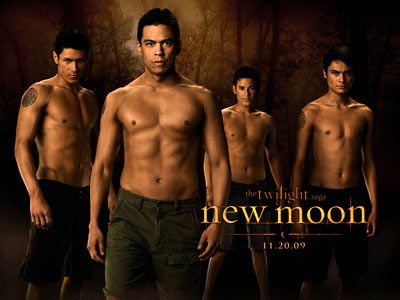
Another example of a way of identifying an audience for a product can come in the form of sales. Let's take the phenomenon that is Twilight, predominately, a book that has been read/is still read by pre-teen or teenage girls. Knowing this was the demographic for the saga, when the film versions of the books were released, the marketing for these adaptations were blatantly directed at this group. (See said poster below):


Sales of certain products, especially when it comes to considering adapting something for the big screen is important. On creative terms, you still want to attract that audience (because, at first, the fans are the ones who will be seeing the film), and on a commercial level, you want to attract those followers of the book/comic/whatever it is but still garner people who may not have necessarily heard of the original source material. 


Before social networking got to where it is today (something I am going to speak about in a minute), getting feedback through consumer questionaries was another way in which a media industry could identify an audience. 


These questionaries would take place usually face-to-face, but now, they can be done online as well.


Social networking is also another main aspect to how media industries identify audiences. Twitter and Facebook have become prominent in setting 'trends' and things that people 'like'. The more something is tweeted the higher it moves up the ranking on Twitter and becomes a 'trending topic'. The same method is used for 'liking' something on Facebook, too. 


All kinds of companies involved in different media industries are going to be searching these websites, seeing what is the 'hot' discussion topic, because they'll know that if something has become a trend, that is in fashion, it is a perfect thing to cash-in on because it is a free, easy way to find out what people are 'in to' at the moment.  


The thing about fashion is, it only sustains itself for a certain period of time before we end up moving onto something else. That is why companies such as those that work in advertising and so forth, will be checking these sites, seeing what kinds of people will buy into these things that they are speaking about, and figure out how to play this into a profitable product. 

Unit 2 Certificate, 2.1 - "Outline ways in which a media product is constructed for a specific audience."


Unit 2 Certificate, 2.1 - "Outline ways in which a media product is constructed for a specific audience."


When thinking of a product, the first thing that should pop into your head - even if the money side/making profit doesn't cross your mind - should be, 'Who is this for?'. Even if something is meant for you and only you, if you want the chance to get it out there in the world, you'll have to find your market and that audience, even if it only consists of one person. 

There are a fair few ways in which a media product is constructed for a specific audience. Because there are so many different things that can affect a product (from gender, to age, to nationality), no matter how much I dislike that industries carve out a particular product to sell to a market that will include a certain 'type' of person, it happens. 


I'm going to hone in on an audience in particular, one, I believe, I know a little bit about - teenage girls.

Before I speak about a certain media product that has been shaped for this age group, a person that has, without doubt, been moulded for this target market is Justin Bieber. Love him, hate him, or don't really care about him, he has been around for a while now, and though he himself can't be considered a media product (only a product of the media), there are a fair few things that his name has been attached to that screams of targeting his girl-filled audience.

Excuse the nail varnish line, weird perfume, and his selection of dolls, Justin Bieber, to me, is mostly known for releasing puppy-dog radio-and-mother-friendly music, putting him in the position of being seen as a tad cooler than the Disney kids, but not quite. 


Though he is only a few albums into his career (most of which are remixes), the media frenzy around him has already been in full swing for the last few years, and doesn't look like it is calming down any time soon. 

So what does Justin Bieber have to do with the construction of a media product? Well, his most recent album release, Under the Mistletoe, is the perfect example of a product aimed straight at a specific audience, and I shall tell you why.

I think we're all in the know about the Christmas season being heavy on the spending, and  the time when parents will fork out a fair bit of money to buy presents for the kids. Justin Bieber has been molded for the pre-teen and early teenaged girl age bracket, the age group that don't have their own money coming their way, but instead, are at the disposal of their parents much-bigger income.


What is the clincher for me when it comes to this release is that Bieber is donating 'some' of the proceeds to a charity. Yes, the kid that is worth nearly a $100 million could have gone all out and donated all of the earnings of the album to a charity of his choice (with some, naturally, going to his record company because they couldn't possibly need more money than they already have) - but no. Still, the ringing of 'charity' along with 'Christmas' in any mother's ears will make it even more of an easy sell for the album.


No matter the cheap cash-in that some have mentioned this album obviously is, the perfectly-pitched marketing from Team Bieber is too good to ignore. 

Though others - i.e fans - may disagree with the statement I am about to give, it all seems even more obvious than usual that Bieber is practically a musical cash-cow. So, the teen-sensation releases an album around the time, in terms of money, people are more 'giving', and parents are willing to adhere to this because it is all in the vain of Christmas, and more so for a festive-themed album, and people don't bat an eyelash? Even if  family, parents, friends etc. aren't willing to fork out the cash before December, the fact that the album is shoved full of Christmas songs makes it a kind of must-buy for the 25th. Plus, on top of this, it has been a while (for the patience of teenage girls anyway) when Bieber last released new music, leaving more anticipation for anything music-related from the 17 year old. Thinking about Under the Mistletoe now, there isn't that much difference from when the remix album of Bieber's documentary Never Say Never stormed the box office. Seeing a pattern here?


Christmas-themed albums have always done well in the charts, particularly for publicised pop-artists, and Bieber is one of the many who have lined up on the success that comes with season albums, managing to shift over 210,000 units (copies) of Under the Mistletoe in its first week of release. I'm sure the album will be selling plenty more copies come December.