
About Me

- Cherokee
- A college created blog that shall follow all the courses I undertake on my apprenticeship. Comical, and terribly cringe-worthy mishaps are inevitable.
Friday, 19 August 2011
DiVA Video Viral Campaign: Final Cut
And here is the final viral video for the DiVA campaign that I and my fellow apprentices worked on.
Enjoy!

Unit 8, 1.1 "Describe the industries within the Creative Media sector."
Unit 8, 1.1 - "Describe the industries within the Creative Media sector."
There are so many creative media industries out there that it is hard to keep up at times with them. Though all industries, at some point or other, cross paths (Music in Film, Games in Film) the two creative media fields I have chosen to speak about are very big
 The first industry I am going to talk about is the literary industry, but what does it mean exactly?

 In the mix of fashion, there are mountains of other lifestyle magazines, both for men and women. Cooking, sport, gaming – there is such a diverse arrangement of magazines out there that whatever your area of interest is, there is bound to be a magazine that covers it, and one of those magazines, to me, is the biggest offender of ‘selling’ a lifestyle outlook – gossip magazines.
 So when we see bikini photographs of ‘celebrities’ with a little bit of cellulite, that god-like status is knocked down a notch and suddenly, these people become, well, people – normal.


There are so many creative media industries out there that it is hard to keep up at times with them. Though all industries, at some point or other, cross paths (Music in Film, Games in Film) the two creative media fields I have chosen to speak about are very big
 The first industry I am going to talk about is the literary industry, but what does it mean exactly?
For me, the moment I hear the word ‘literary’ I automatically think of books. Books are still as popular as ever, but it is the eBook that is really gaining momentum in our technology-dominated world1. There will always be books out there because, as humans, we have a desire to escape from our day to day life, and fictional books can supply this, whether that is in an electronic or physical format.
For non-fiction, the internet has become our go-to place (news sites, gossip sites, and the like) but escapism is something the internet fails to give to us in the way that fiction can. And argue with me if you will, but there are two types of books: Fiction and non-fiction.
Fiction and non-fiction are two lines that are constantly blurred, though. And two of the main sources of information, something we all try to gain more of throughout our life no matter what kind of information, are newspapers and magazines.
Unlike with books, which have obviously undergone heavy debate over whether they are more ‘artsy’ or more ‘intelligent’ than your average magazine or newspaper, you have a gigantic worldwide source of daily information within newspapers and magazines that books – particularly fictional ones – cannot achieve.
As a society, we are fed stories through the opinions of so many published columnists. Because newspapers are distributed daily on most occasions, we’re more likely to be swayed by the opinions of The Evening Standard than Heat magazine because of this frequency of publication.

The Daily Mail is a prime example of a newspaper that produces the most ridiculous stories of day-to-day like; happily letting their readers buy into these ideals because it is ultimately what sells the newspaper2. This isn’t a criticism of Daily Mail readers; instead, it makes perfect sense.
Society, and the people that occupy our society, are always looking for acceptance, whether we like to admit it or not. The acceptance that we all to some extent aspire to can range from being within our family, friends, or in a working environment. The main thing is, it is important for us to feel like we apart of life. This is why branding works so well, if we have a certain brand of clothing, we are in the know – we are in vogue. We belong .
Magazines lock onto this human desire to belong, which leads me onto what magazines do best: plugging lifestyles, and acceptable ones at that.
I am not going to deny that I enjoy reading fashion magazines like Dazed and Confused and iD, but I’d like to think I am not buying into what they are ultimately trying to sell me – a cool lifestyle.
At times, they are in tune with what is going on with society. For example, Dazed and Confused ran a detailed piece on the student riots a few issues back3, and dedicated a whole issue – and I mean a whole issue – to unemployed and undiscovered creative’s in Britain4. Most recently, the UK riots have featured heavily on their site, Dazed Digital5, and no doubt will make an appearance in their upcoming October issue.
But after all, Dazed and Confused is a fashion magazine, and their readership is expecting a lot more fashion than the discussion of political issues, and the epitome of fashion (no matter how much I respect it as a wonderful art form) is there to sell a lifestyle.
 In the mix of fashion, there are mountains of other lifestyle magazines, both for men and women. Cooking, sport, gaming – there is such a diverse arrangement of magazines out there that whatever your area of interest is, there is bound to be a magazine that covers it, and one of those magazines, to me, is the biggest offender of ‘selling’ a lifestyle outlook – gossip magazines.
 While Dazed and Confused can get your blonde cutesy Hollywood actress on their front cover if need be6 or pop royalty7, gossip magazines take it one step further than seeing a photoshopped celebrity on the cover of Marie Claire8. Celebrities are, for some reason or other in this culture, Godly figures. You could say that ‘celebrity’ is the new religion.
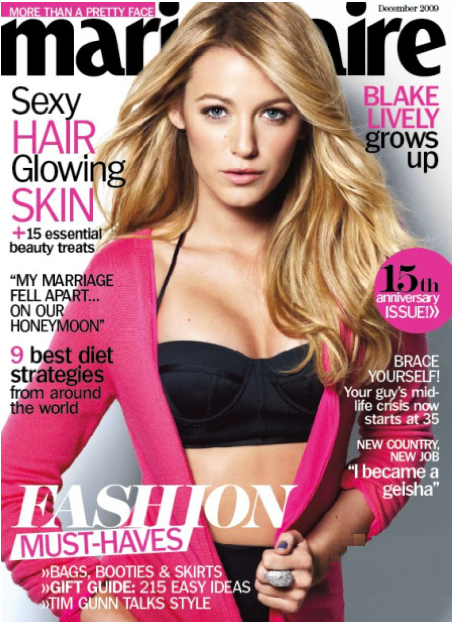
The celebrity lifestyle is one we are all supposedly supposed to aspire to – the money, the cars; the girls – that is the way of living which will apparently give us most happiness.
 So when we see bikini photographs of ‘celebrities’ with a little bit of cellulite, that god-like status is knocked down a notch and suddenly, these people become, well, people – normal.
 Again, this is one of the many reasons why gossip magazines sell so well. Seeing celebrities in this state of ‘normality’ makes us feel better about ourselves, linking back into what is acceptable within our society.
Selling a certain lifestyle doesn’t stop at magazines and newspapers, either.
It transcends right on over to the next topic I am going to speak about – the TV industry.
You’d think with the massive internet boom in the 21st Century that the TV industry would have been bust years ago.
Wrong.
To this day, TV is still alive and kicking, having managed to fight with the instant access of the internet. Things like BBCiplayer and being able to pause programmes while they are on air9 are just some of the many tools that the industry has used to tackle the quick accessibility of the net.
One show that has kept viewers glued to their screens is none other than The X Factor. Even saying the name of the programme sparks some kind of reaction from anyone who lives in Britain – whether that be joy or disdain – everyone has an opinion on The X Factor, and its success is down to one man, and one man alone – Simon Cowell.
How Simon Cowell has managed to what was basically Pop Idol with a few tweaks, into a ridiculous headline grabbing10 phenomena is beyond me, but he has done it, and now X Factor has gone global11, ready to make even more dollars for the grey crew-neck wearing multimillionaire.

Out of all the types of TV programmes you can get (soaps, dramas, documentaries), this century, it is impossible to flick through TV channels without finding one reality TV show. From guilty pleasure American imports like Keeping up with the Kardashians and Jersey Shore, to our own home-grown rip-offs Made in Chelsea and The Only Way is Essex, we can’t get enough of reality TV. Even programmes like Come Dine with Me and Mastermind are, to an extent, reality TV.
BBC3 are notorious for running ‘documentaries’ on their channel that play out much more like reality TV than a real insight into the lives and hardships of others in the world (see Smaller Teen, Bigger World which follows the life of 3ft 11’ teenager Jazz.)
Society keeps coming into play when speaking about these industries because, well, society is such a big part of how we all operate; how all the creative media industries work. Our society is people, and people buy into products. Reality TV is a product, just as magazines and newspapers are. Yet again, reality TV is another field in the many creative money making industries that is selling us a lifestyle.
There are definitely times when reality TV can go completely overboard and verge on just plain wrong.
Celebrity Rehab, in my eyes, is such a degrading and sickening show, that I can’t understand why anyone would get even guilty-type pleasure out of watching human beings breakdown right onscreen.
Either way, no matter what I think, reality TV will probably always have a place in society in some form or another, so what are the programmes that really kicked off this fascination?
Who Wants to Be a Millionaire? and Big Brother are the real game players; the shows that brought reality TV into the lime light. And remember, this was long before our screens were dominated by singing contests and heated cookery shows.
Aired in 1998, Who Wants to Be a Millionaire? was one of the first reality TV shows to make a really big global impact. From board games12, to its own film in the shape of the Oscar winning Slumdog Millionaire, Who Wants to Be a Millionaire? was the predecessor to The X Factor – it really grabbed headlines13.

Rolling round in 1999, Big Brother, just like Who Wants to Be a Millionaire?, went global. The first series of the controversial TV show aired in the Netherlands before coming to our shores, where it became a must-talk about craze14.
As other reality TV shows came along, the Big Brother viewership declined15 and Channel 4 dropped the show. Now Channel 5 have bought the programme and the question of whether it will ever be able to relive its heyday will always be there, but who knows, maybe the nation will fall in love with Big Brother all over again?
Doubt it.
Why does reality TV work so well, though? Well, to me, it does exactly what it has been bred to do because it gives in to the infamous Andy Warhol quote about everyone having their 15 minutes of fame. For a moment, even if it is brief, your average Joe can become famous, a celebrity, a godly figure. Without this obsession with celebrity culture and the lives of the rich and famous, reality TV would be nothing, it would be non-existent.
So, to wrap things up (as there are so many fields in both the literary and TV industry that I couldn’t possibly talk about them all), both these sectors are important to the Creative Media Industry as a whole, and, as I have proved, are extremely influential within the fabric of society. Whether the way they are influential to us is actually a good thing or not is debatable.
Wednesday, 10 August 2011
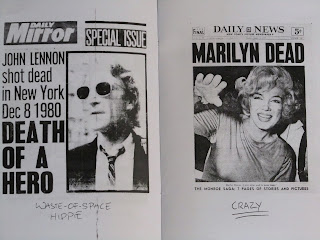
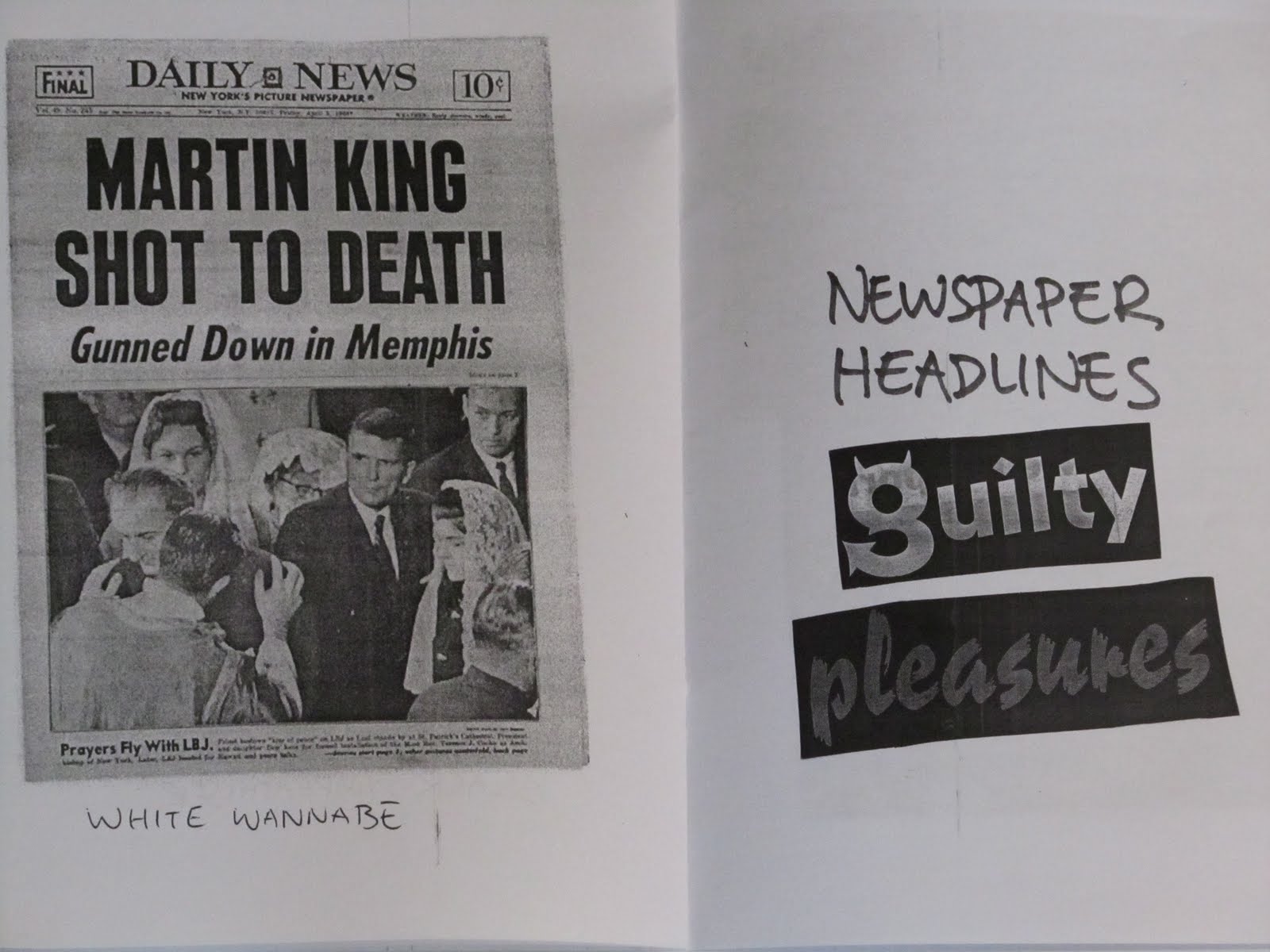
Final product: My Zine
A while back, I spoke of making a zine for Unit 8 of our college course, and here are photos of some of the pages in the final product!






Friday, 29 July 2011
DiVA Viral Marketing Campaign Pitch
Before DiVA chose what idea that fitted the brief for the Viral Marketing Campaign, us four apprentices, Joy, Edun, Robert, and I, had to pitch our ideas to them.
Unfortunately, I wasn't selected, however, you can check out my pitch below (which was originally a Power Point presentation, but Slideshare wouldn't let me upload it.)
Unfortunately, I wasn't selected, however, you can check out my pitch below (which was originally a Power Point presentation, but Slideshare wouldn't let me upload it.)
Tuesday, 26 July 2011
Unit 18, 1.1 - "Describe protocols, devices and methods used in digital communication systems with some appropriate use of subject terminology."
Unit 18, 1.1 - "Describe protocols, devices and methods used in digital communication systems with some appropriate use of subject terminology."
Because the internet and the online universe is such an expansive place, there are a number of protocols, devices and methods that are used in digital communication systems. On top of this, there are a fair few terminologies specifically dedicated to these systems, a selection which can be seen below:
Blog: A blog is a personal website that can either be set up/run by a select person, or a group of people. Blogging formats that can be used ranged from blogspot to wordpress.
3G: 3G is the third generation of technology on mobile phones, which includes interent access.
Reference
Reference
Bluetooth:Bluetooth is a source of wireless communication made over short distances to phones and computers.
Multimedia Messaging System: Multimedia Messaging System (or MMS for short) is the now-standard way of sending messages via phones that include multimedia (such as photos and
Reference
Reference
URL: A URL is an online address that includes http://, along with the domain name of the selected site.
Appropriate Language Conventions for texting a friend:
I usually text the way that I type, so the conventional abbreviations that are used in texting a friend, I don't usually carry out. However, 'btw' (by the way) 'imo' (in my opinion) and of course, 'lol' (laugh out loud) are a couple I do use.
Here is an example of something I would text to a friend: "Hey, how are you, man? What are you doing on Saturday? Wanna meet up? I've got a free house for a couple of hours; the family are going out. You game?"
Appropriate Language Conventions of emailing a business colleague:
Dear Mr Smith,
As per our previous correspondance, please find attached the signed and dated document for your files.
All the best,
Cherokee
Commenting and Linking
In the blogging world, commenting on other people's blogs is a sure-fire way of getting bloggers to visit your page.
Joy at Joy Harrison Entertainment - Commenting on Joy's love for The Vampire Diaries.
Edun at The Edun Blog - Commenting on Edun's idea of an underground Cinema/Theatre.
Robert at RCM Productions - Commenting on Robert's Digital Life.
I'm Technically Rather Good!

Because I wasn't one of the cast in our DiVA Viral Marketing Campaign, my role was very-much more of a hands-on process, particularly when it came to shooting the actual video.
I had to make sure the white balance, the framing and the lighting was on-point for the shots we needed to take, otherwise we wouldn't have been able to capture the vision we had on paper and relay them to the screen.
In the editing room, the opening, I believe, is the strongest part of the video. The cutaway clips that are in our final cut, work really well thanks to the editing of Robert, and the shots that we managed to film.

Later on in the editing room, this same sound was continued for when Robert jumps into view, and without this attention to detail with the design of the sound, we wouldn't have been able to use this for the video, and there would have been lack of continuitity without this sound.

While the rest of the team carried out the final shots of the video, Deri and I, with suggestions made by the group on the choice of music, then found the appropriate free of copyright soundtrack for the short, which included the flushing of a toilet noise, and a superhero theme for Apprentice Man.
Then, we gathered the team to listen to these suggestions,and as a group, we decided what music would make the final cut from the list that Deri and I presented.
Through this experience, I have gathered the basic knowledge of shooting, lighting, and editing a video, in a short period of time.
Looking forward to putting all this knowledge back into action!
Subscribe to:
Posts (Atom)