About Me

My photo
A college created blog that shall follow all the courses I undertake on my apprenticeship. Comical, and terribly cringe-worthy mishaps are inevitable.

Tuesday, 22 November 2011

Unit 2 (Certificate), 1.1 "Outline ways in which a media industry identifies audiences with its products"


Unit 2 Certificate, 1.1 - "Outline ways in which a media industry identifies audiences for its products."

Creative Media industries couldn't exist without us, the audience, consuming their products. But how do they know what kind of products to sell to certain demographics? From age, to race, to gender, to sexual orientation, we are pigeon holed into certain sections in society when it comes to what attracts buyers unfortunately, and this is the basis of most media industries. If they know the kinds of formula that works for a certain age for example, and it makes them a profit, they'll follow this formula while it is still producing revenue.


A perfect example of a way in which the media industry can identify its audience is through television. Audience measurement keeps an eye on all kinds of things when it comes to TV and who is watching what. The most interesting thing about measuring the kinds of viewers watching specific programmes is the demographic that is used (pasted as follows):


  • P2+ = Persons aged 2 or more
  • P12-34 = Persons aged 12 to 34
  • P18-49 = Persons aged 18 to 49
  • A18-34 = Adults aged 18 to 34
  • Men 18-34
  • Women 18-34

Another example of a way of identifying an audience for a product can come in the form of sales. Let's take the phenomenon that is Twilight, predominately, a book that has been read/is still read by pre-teen or teenage girls. Knowing this was the demographic for the saga, when the film versions of the books were released, the marketing for these adaptations were blatantly directed at this group. (See said poster below):
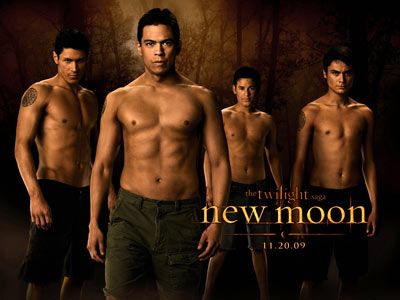


Sales of certain products, especially when it comes to considering adapting something for the big screen is important. On creative terms, you still want to attract that audience (because, at first, the fans are the ones who will be seeing the film), and on a commercial level, you want to attract those followers of the book/comic/whatever it is but still garner people who may not have necessarily heard of the original source material. 


Before social networking got to where it is today (something I am going to speak about in a minute), getting feedback through consumer questionaries was another way in which a media industry could identify an audience. 


These questionaries would take place usually face-to-face, but now, they can be done online as well.


Social networking is also another main aspect to how media industries identify audiences. Twitter and Facebook have become prominent in setting 'trends' and things that people 'like'. The more something is tweeted the higher it moves up the ranking on Twitter and becomes a 'trending topic'. The same method is used for 'liking' something on Facebook, too. 


All kinds of companies involved in different media industries are going to be searching these websites, seeing what is the 'hot' discussion topic, because they'll know that if something has become a trend, that is in fashion, it is a perfect thing to cash-in on because it is a free, easy way to find out what people are 'in to' at the moment.  


The thing about fashion is, it only sustains itself for a certain period of time before we end up moving onto something else. That is why companies such as those that work in advertising and so forth, will be checking these sites, seeing what kinds of people will buy into these things that they are speaking about, and figure out how to play this into a profitable product. 

Unit 2 Certificate, 2.1 - "Outline ways in which a media product is constructed for a specific audience."


Unit 2 Certificate, 2.1 - "Outline ways in which a media product is constructed for a specific audience."


When thinking of a product, the first thing that should pop into your head - even if the money side/making profit doesn't cross your mind - should be, 'Who is this for?'. Even if something is meant for you and only you, if you want the chance to get it out there in the world, you'll have to find your market and that audience, even if it only consists of one person. 

There are a fair few ways in which a media product is constructed for a specific audience. Because there are so many different things that can affect a product (from gender, to age, to nationality), no matter how much I dislike that industries carve out a particular product to sell to a market that will include a certain 'type' of person, it happens. 


I'm going to hone in on an audience in particular, one, I believe, I know a little bit about - teenage girls.

Before I speak about a certain media product that has been shaped for this age group, a person that has, without doubt, been moulded for this target market is Justin Bieber. Love him, hate him, or don't really care about him, he has been around for a while now, and though he himself can't be considered a media product (only a product of the media), there are a fair few things that his name has been attached to that screams of targeting his girl-filled audience.

Excuse the nail varnish line, weird perfume, and his selection of dolls, Justin Bieber, to me, is mostly known for releasing puppy-dog radio-and-mother-friendly music, putting him in the position of being seen as a tad cooler than the Disney kids, but not quite. 


Though he is only a few albums into his career (most of which are remixes), the media frenzy around him has already been in full swing for the last few years, and doesn't look like it is calming down any time soon. 

So what does Justin Bieber have to do with the construction of a media product? Well, his most recent album release, Under the Mistletoe, is the perfect example of a product aimed straight at a specific audience, and I shall tell you why.

I think we're all in the know about the Christmas season being heavy on the spending, and  the time when parents will fork out a fair bit of money to buy presents for the kids. Justin Bieber has been molded for the pre-teen and early teenaged girl age bracket, the age group that don't have their own money coming their way, but instead, are at the disposal of their parents much-bigger income.


What is the clincher for me when it comes to this release is that Bieber is donating 'some' of the proceeds to a charity. Yes, the kid that is worth nearly a $100 million could have gone all out and donated all of the earnings of the album to a charity of his choice (with some, naturally, going to his record company because they couldn't possibly need more money than they already have) - but no. Still, the ringing of 'charity' along with 'Christmas' in any mother's ears will make it even more of an easy sell for the album.


No matter the cheap cash-in that some have mentioned this album obviously is, the perfectly-pitched marketing from Team Bieber is too good to ignore. 

Though others - i.e fans - may disagree with the statement I am about to give, it all seems even more obvious than usual that Bieber is practically a musical cash-cow. So, the teen-sensation releases an album around the time, in terms of money, people are more 'giving', and parents are willing to adhere to this because it is all in the vain of Christmas, and more so for a festive-themed album, and people don't bat an eyelash? Even if  family, parents, friends etc. aren't willing to fork out the cash before December, the fact that the album is shoved full of Christmas songs makes it a kind of must-buy for the 25th. Plus, on top of this, it has been a while (for the patience of teenage girls anyway) when Bieber last released new music, leaving more anticipation for anything music-related from the 17 year old. Thinking about Under the Mistletoe now, there isn't that much difference from when the remix album of Bieber's documentary Never Say Never stormed the box office. Seeing a pattern here?


Christmas-themed albums have always done well in the charts, particularly for publicised pop-artists, and Bieber is one of the many who have lined up on the success that comes with season albums, managing to shift over 210,000 units (copies) of Under the Mistletoe in its first week of release. I'm sure the album will be selling plenty more copies come December. 

Friday, 18 November 2011

Unit 6 & Unit 10 - Health & Safety Video


Diploma Unit 6, 1.1 - "Define hazards and risks."

Unit 10, 1.1 - "Describe key elements of health and safety regulations, relevant to working in the Creative Media sector."


1.3 "Describe the main employer responsibilities under the Health and Safety at Work Act."

2.1 "Describe the differences between hazards and risks."

Sunday, 13 November 2011

Unit 3, 3.1 "Describe the changing expectations of audiences and consumers in a specific creative industry."

Unit 3, 3.1 "Describe the changing expectations of audiences and consumers in a specific creative industry."


Having spoken about the TV industry before in Unit 8, it seemed suiting to speak about it here again, as it is a creative industry that has been heavily affected by the expectations of audiences and consumers.

Because those that consume and watch TV expect that everything is going to be instant, as mentioned in my Literary/TV essay, television companies had to re-think the way that they broadcasted their shows, and how, for people that wanted easy access to shows whenever they would like, could have an option.

This option came in the form of online, legal, streaming and downloading in the shape of BBCiPlayer, 4oD - and so forth - for internet users. And for those that prefer to watch their programmes on a bigger screen, you now have the choice, with a Sky+ box, to pause and rewind live TV, while recording shows to watch at a later date without using a DVD/Video recorder.

Of course we can’t battle illegal downloading/streaming, as that is something that has risen considerably over the past few years or so, but there are ways that TV networks have tried to counter that part of the industry, which can be seen with these stats of how many people are watching on-demand television.


Unit 3, 2.1 "Explain what is meant by 'converging technology."

Unit 3, 2.1 - "Explain what is meant by 'converging technology."

Converging technology is when you take two or more technological products that were previously used separately for different tasks, and merge them to make one, ultimate, product.

Examples of converged technological products can range from everything and anything that we use now, including smart phones (which can surf the internet, download music/films/games, instant message people, and more) and game consoles (which can, like smart phones, surf the internet, download music/films/games, play music and films).

The one key converging technological product that I can think of is what I am using now – a computer.


The computer is probably the ultimate converged technological product; one that most of us use on a day-to-day basis, whether that be at home or on the job. 

I have given two examples of what a computer can do that were things other media products did before.

Playing music, films and games were things that, previously, were all down to CD and vinyl players/walkmans (music), DVD players (film) and game consoles (games). Now, we can happily watch films, listen to music, and play games on the comfort of our own computers (though the latter, PC gaming, has been around for some time now, longer than the other two.)

Conversing with family, friends, work colleagues, and sometimes, complete strangers, would usually be done by phone, or, in some cases, snail mail. Now, on a computer, we have the option to instant message anyone we would like with messaging systems such as Skype and MSN (the former being able to ring people on their mobile phones, too). Emailing is another aspect to communicating via the computer, something that didn't exist not so many years ago. 


There are many other things that computers can do that were previously one technology. Even a calculator in the accessories section of a computer is considered as a converging technology because a calculator was formally its own product and not associated with anything else. 

Thursday, 3 November 2011

Unit 1, 3.3 "Describe and pitch a creative idea to an employer or commissioner."

Unit 1, 3.3 "Describe and pitch a creative idea to an employer or commissioner."


*Reprinted from Unit 6


Here is the following pitch that I did back in July for the DiVA viral marketing campaign. 

Unit 2, 2.1 "Describe examples of effective presentation techniques" and 2.2 "Select and justify appropriate presentation techniques for a specific media idea"

Because, as usual, I had a lot to say on one particular subheading of a unit, I've made a power point presentation for Unit 2, 2.1 and 2.2.


Watch below!


Unit 2, 2.1 and 2.2

View more presentations from CherokeeSS.