About Me

My photo
A college created blog that shall follow all the courses I undertake on my apprenticeship. Comical, and terribly cringe-worthy mishaps are inevitable.

Friday, 2 December 2011

Unit 3, 1.1 "Describe the uses of digital technology within the Creative Media sector and the relationships this has created between industries in the sector."

Unit 3, 1.1 "Describe the uses of digital technology within the Creative Media sector and the relationships this has created between industries in the sector."

Digital technology plays a major part in our personal and mostly everyone's professional lives. With this, many digital technologies have been created for the purpose of using Creative Media sector environments. 

These can range from the following technologies below, mostly used for the film industry, but I will get into the relationships that these have created between other industries in the sector:

Final Draft  

Final Draft is a scriptwriting software that has been used by many prolific screenwriters and directors, one of which is Hollywood writer/director JJ. Abrams, responsible for the Star Trek reboot, Super 8 and TV show, Lost. 

Celtx is the most popular free-option when it comes to scriptwriting, and can pretty much do the same things that Final Draft can, without you having to pay for it.

Most industry professionals use Final Draft, but for those starting out with little money, Celtx is an easy, affordable option.


Final Cut Pro/Studio

Final Cut Pro is a video editing software tool, and, like Final Draft, is used by a lot of industry professionals. The most notable film that has been edited using Final Cut Pro is The Social Network, which, incidentally, won the Best Editing Oscar last year.


Software similar to Final Cut Pro - that is free - is probably the most difficult to come by because it is such a niche, and controlled program, that, I think, is worth forking out the money for if you are serious about editing work.

iMovie and Windows Movie Maker are both free editing softwares, but two that can only do the basis of editing; nothing close to the scope that Final Cut Pro has. 

Photoshop

Originally used for photography, Photoshop is a photographic editing software. I find it very hard to come across someone now that hasn't at least used Photoshop once, or knows the basics to it. 

Free options to Photoshop include iPhoto, Pixlr and Paint, but, while Celtx can pretty much do the same things that Final Draft can, Photoshop is by far the bigger, and more advanced software out of the ones I've mentioned.

So, yes, it is a good thing that all these kinds of technologies exist, as it enables other industries to use these tools, too, not just Film and Photography industries (the two which I have mentioned, above). 

Final Draft has the ability to transcend into the music and TV industries, as well. The format for a script remains the same even if you are writing for a music video or a TV show. 

Celtx, the free rival of Final Draft, let's you write comics as well, something that Final Draft is incapable of doing. 

The same can be said for Final Cut Pro, which doesn't just need to be editing software for film. Music videos and TV shows can get on in the act, too. This doesn't mean to see that animations can't be edited on Final Cut Pro, because they can. The most obvious example of this is, though it was the film version, is The Simpsons Movie.

iMovie and Windows Movie Maker are usually used for personal videos, but they can also, like Final Cut Pro, be used for other editing means. 

Photoshop started off as being used for editing photos, but has quickly become a graphic designing and artist tool, as well, leading onto all these other kinds of free photo-editing softwares where you can draw and design graphics.

While these tools are a good thing for the Creative Media sector, as it makes it more accessible to everyone and not just industry professionals, this can also be viewed as an issue as well. The accessibility of these tools mean that a lot of work for certain companies can be done in-house rather than hiring people from the outside to do task.

A good example of this occurring is with The National Theatre. Most of their work, if not all of their work, is done in-house. Something that my fellow apprentices and I learned when we visited The National was the figures of how many people they employ, which are well over 1,000.

This means that there are many departments in the theatre, which include writing, costume and editing. One of those departments, design, apparently didn't exist a few years back. In order to get designs for their posters, flyers, and anything else that needed design-work done, The National would go out-of-house and hire the people they needed to do the work.

Now, because they have an in-house design department to go to when they need anything design-related done, The National have managed to cut-costs. It is always cheaper to do work in-house (where you can reap the profits) then go to someone out-of-house and probably end up spending more money on the same design work you would have gotten in your own company. 

While the digital technologies I listed have created an open world in terms of who can start editing, writing, designing and so on, this also means that places like The National will already have people in-house to do these jobs, thus creating less work for people that aren't involved with successful companies like The National, in other industries. 

Monday, 28 November 2011

Unit 6 (Diploma), 1.2 - "Outline key hazards and risks in own workplace, describing safe working practices."


Unit 6 (Diploma), 1.2 - "Outline key hazards and risks in own workplace, describing safe working practices."

My work place, like all the other apprentices on this course,  is situated in an office. And like a few other apprentices, too, my office is a very small, production-based set-up, so, in a way, it is more down to me to deal with all the possible health and safety risks, and then hazards that may arise on the job.

Because the office is small, there is a lot of wiring crossing the floor, which, before I intervened, could have easily been a tripping hazard. A lot of plugs remained near things like our water cooler and fridge, for example. 

To keep the wiring contained, I used cable protectors that we have in the office. This automatically reduces the risk of anyone tripping over the wiring we have in the office as it is a tool that has been specifically designed for such things, but also, protects the wires from being damaged, too.

In order to keep the plugs away from substances that could be a serious hazard, particularly for electrical substances (water), I organised the plugs, added many extension leads, and specifically made sure that as many plugs as possible were kept well away from the water cooler and fridge without being another risk in itself. 

We also have a section of the office, far away from our eating area (where the fridge, microwave, kettle, water cooler and cutlery) is, were all our chemicals are, which includes cleaning equipment and cleaning utensils.

Though a lot of people forget this, it is very important to keep dangerous chemicals away from food, as, even spraying a bottle of something in the area of where you are eating can be room for concern. It is always good to remain alert to these things, not just health and safety risks that may seem more obvious at first (like the wiring).

18.1, 3.1 - "Produce a website with some assistance."

18.1, 3.1 - "Produce a website with some assistance."

The blog you are now reading this post on, Cherokee Media, was created at the beginning of my course back in April, and I have been updating it with my units ever since.

I also, in May of this year, created a sort-of accompanying 'website' in the shape of Feminising Film.

The assistance I had in for these sites was to get one of my friends to design both of the headers I have used, and also suggest the kind of layout and HTML style I should have on the blog, which I have edited. 

Sunday, 27 November 2011

Unit 2 (Certificate), 3.1 - "Outline ways in which a media product might be understood by its audience."

Unit 2, 3.1 "Outline ways in which a media product might be understood by its audience."

An audience can respond to media products in completely different ways, and a good example of this is when the e4 hit show, Skins, aired a couple of years back, followed by the American version this year. While one was embraced with open arms, benefiting from it's 'controversial' status, the other was on the receiving end of a massive backlash from the media , parents, and the like.

The original Skins tapped into an audience that had originally been neglected on TV for American imports such as One Tree Hill and The O.C. Rather than being insanely-rich white teens, those cast in Skins - who also were, and looked their age - could be the person down the street, someone you knew, or even you. (Heightened for entertainment sake, of course.)

This is what made Skins such a success when it managed to clock up to 1.5 million viewers on the opening episode for the first series. The show found an audience that hadn't been expressed on TV before (especially on British television), and sold them a life style that could, and has been read, as being 'cool'.


Take a look at the first teaser trailer for series one. This advertising, to me, screams of - and plugs into - the teeange-cool that, when we're younger, aspire to on some level. The same 'cool' advertising has gone on for the last few years, causing a few complaints across the board. Being a teenager myself, and knowing how complaints of things such as the series 3 teaser trailer  introducing the new cast members isn't going to make people my age not watch the show - they'll be more intrigued because of it - thus contributing to this 'cool' factor, that even adults will agree with. This is one key way that Skins has been understood by its young audience who are at an important transitional stage in their life where they are finding out who they are, and are a lot more caring to trends/being cool than adults usually are.

Another point to make would be the fact that, you, the average Skins watcher, can go to open casting calls and attempt to live that life yourself, albeit fictionally, but as a main cast member; not just an extra.

Keeping on the line of Skins transcending off our TV screens and into real life, the 'must be cool' outlook has gone on to be adopted by fans of the show, who have hosted now-notorious 'Skins' parties, not including ones designed for the promotion of the series through those that make the show.

One thing that is interesting about the Skins format, is that, when the American remake aired earlier this year, audiences across the pond 'just didn't get it'.

MTV's own version of Skins was set out to rival the UK's, and hopefully tap into an audience they believed existed in the States, too.

However, the opposite happened when the US Skins aired. It had good viewing figures on its opening, but quickly turned into a travesty, thanks to much negative press. Yes, the show itself was even worse than e4's creation, but, the thing is, there just weren't enough people interested in the American version of the show, among another number of reasons causing it to be cancelled after one season. . It also caused a fair amount of controversy for a short-lived TV programme, too, which clearly contributed to it getting plugged. If advertisers  for the show didn't even support it, why should MTV?

The US Skins tried to attract an audience that just wasn't there. And, if it did have an audience, the controversy surrounding the programme didn't help it in anyway, unlike the UK counterpart. The saying 'all publicity is good publicity' may have worked in the UK, but it didn't in the US.

Oddly, the original Skins has done quite well on BBC America, but why? What is the difference between the two audiences?

We sometimes forget about culture divides when it comes to media products, especially with film, tv, and music, but there have been plenty of times when shows, films and music have been banned from certain countries due to their 'content' and the way they those audiences can look at something that may be, in most cases, too open when it comes to sex, drugs, violence etc.

I think this is one of the reasons why BBCAmerica continue to show the UK Skins, but the US Skins is no more. The American culture are a lot more happy to see another country, another culture, engage in the same acts as those in the US Skins did, but, if it comes down to portraying the lives of their own countries kids, it'll

As a British culture, we are a lot more open to those kind of topics (sex, drugs and violence), whereas Americans are - dare I say - more closeted. Here is a good example of one of the many people angered by Skins US, but more so to campaign against one of their advertisers, Clearasil, featuring on the ad breaks.

Many good points have been raised in this article that I have mentioned here in my own post (about the culture divide), but also the fact that, while UK audiences - which include parents - have come to realise that these kind of things go on with teenagers (they were once that age themselves), the US are almost trying to deny it, and would prefer their kids to be watching the likes of Jersey Shore, or something completely not-based in reality.

So, overall, and in answer to the question "Outline ways in which a media product might be understood by its audience", in this example, there are two main ways that an audience may understand a media product:

1) The UK Skins was understood by its young audience to be the new cool programme that depicted, realistically, the lives of British teenagers. The evidence of its success can be seen through the Skins parties, books, casting calls, and competitions.

2) The US Skins remake wasn't understood by the same audience the original was. Instead of being the realistic portrayal of American teenagers lives, the programme faced serious backlash and, clearly, not enough research went into thinking how US audiences would react to the UK's way of thinking teenagers acted in their day-to-day lives.

The audience the programme reached, instead, were angry media outlets and parents, and not the cool, young, fashionable youth that the UK Skins has attracted.  

Friday, 25 November 2011

Unit 5 (Certificate), 3.1 "Use appropriate research methods and techniques to carry out research for a proposed media production" and 4.1 "Present research results."

The proposed media production that I am going to carry out research for is an idea for a film that I thought up a couple of years ago, using Google (search engine) and Youtube (website) as my main sources of research.

In the vain of David Lynch's surrealist vibe, the film, Someone to Watch Over me (named after an Ella Fitzgerald song), takes place in the 1930s, with a noir/ Femme Fatale feel running through it. The story centres around a woman and dancer, Frances, who witnesses the murder of a man at the beginning of the film. We then are guided through the story of how she ended up at that place, where the man was murdered, (a hotel in New York City), which turns out, it was a place she had been performing nightly with her dancing troupe. However, things are, as always, not what it seems, and the question remains in our minds whether what she is telling us is the truth (we get two versions of the film and the events that took place).

As a part of my research for this proposed media production (my film idea) I have listed a couple of actors, style of locations, costumes and music that could be used for the film. 


Actors:

                                                               Joseph Gordon-Levitt 

                                                                   Carrie-Anne Moss


Naomi Watts 


The reason for the selection of these particular actors boils down to what they have previously starred in, and the audience that would be attracted to a film like this.

Firstly, when thinking about the audience for the film, though it would be geared towards the independent cinema-goers who are more used to non-straight forward narratives, the success of films such as Black Swan over the past year have made a gateway to independent cinema that can branch out and make money, albeit not on a Hollywood level, but to make a decent profit. 

Having actors that are recognisable to both the mainstream and independent audience would also help the film's profile, which is something I thought about when conducting the research for the actors I have listed. 

Joseph Gordon Levitt has starred in the crime/noir thriller Brick, while also playing a major role in the trippy-Hollywood blockbuster, Inception. Both of these kind of genres are themes that I had been intending to try and evoke with Someone to Watch Over Me, and, for audiences, he would be recognisble from not only a commercial level, but an independent one too. 

Carrie Anne-Moss hasn't been anything notable of recent times, but she was a lead character in the game-changer (and one of the many films that inspired Inception) The Matrix, and the surreal mind-bender Memento. Like Joseph Gordon Levitt, her appearance in the film would benefit it on a commercial and independent level as she is not an unknown to audiences. 

For David Lynch fans, Naomi Watts will be remembered for her performance in Mulholland Drive back in 2001. She has been in many high profiled films since then such as King Kong, and has worked for prolific directors like Woody Allen and Clint Eastwood. Out of all the other actors listed here, because the film is going straight for a David Lynch-inspired vibe, Naomi Watts would be the perfect gateway into getting the audience that this film would attract. 

Costumes:


Music:


Setting:

Why the period setting? Well, we're all aware that period films, particularly in the British film industry, is something that we are notoriously good at. Take The King's Speech for example, a period film that became a blockbuster smash. Though Someone to Watch Over Me wouldn't tap into the wide audience that The King's Speech did, the period setting, I believe, would definitely cause intrigue for the audience that I am trying to attract, and would also benefit the story on a stylistic level, too. 


Box office takings:

The one thing that a lot of independent films struggle to do is make their money back. Over recent years, though, independent cinema has proved to break through the mainstream.

See a list of independent films I have made below, that, even with similar themes to Someone to Watch Over Me, have been able to make their money  back at the box office. 


Black Swan

Year: 2011 (UK release)

Star power: Natalie Portman, Vincent Cassel, Mila Kunis, Barbra Hershey and Winona Ryder

Themes: Psychological, Surreal

Budget: $13 million

Gross (worldwide): $329, 398, 046

Reference: Box Office Mojo


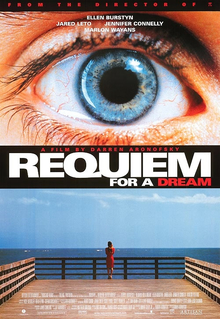
Requiem for a Dream

Year: 2000 (UK release)

Star power: Jared Leto, Jennifer Connelly, Ellen Burstyn and Marlon Wayans

Themes: Psychological

Budget: $4.5 million

Gross (worldwide): $,7,390,108

Reference: Box Office Mojo and Wikipedia 


Mulholland Drive

Year: 2002 (UK release)

Star Power: Naomi Watts, Laura Harring and Justin Theroux

Themes: Psychological, Surreal, Non-linear narrative

Budget: $15 million

Gross (worldwide): $20,117,339

Reference: Box Office Mojo and Wikipedia


The Tree of Life

Year: 2011 (UK release)

Star power: Brad Pitt, Sean Penn and Jessica Chastain

Themes: Non-linear narrative, surreal 

Budget: $32 million 

Gross (worldwide): $54,303,319

Reference: Box Office Mojo


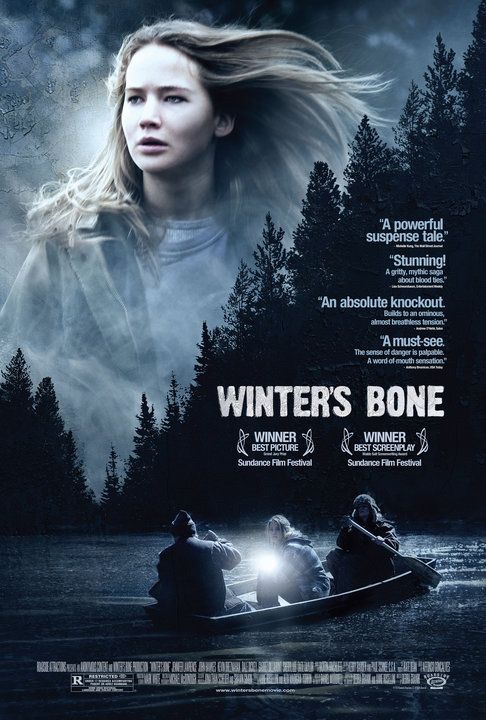
Winters Bone

Year: 2010 (UK release)

Star power: Jennifer Lawrence and John Hawkes

Themes: Crime, Neo-noir

Budget: $2 million

Gross (worldwide): $13,831,503

Reference: Box Office Mojo 


So, to round up Unit 5 3.1 and 4.1, I believe I have been able to demonstrate that I can use appropriate research methods (the internet) and techniques (searching key words such as Mulholland Drive box office gross into Google) to gather my research. 

On top of this, I have been able to present my findings through a detailed list of actors, music, costumes, settings for the proposed production, and to back up how I believe the film would be able to earn its budget back, have selected successful (money wise, and critical) independent films over the past 12 years that deal with similar themes. 

Unit 5 (Certificate), 1.1 "Outline research methods and techniques."

Unit 5 (Certificate), 1.1 - "Outline research methods and techniques."

There are many researching methods and techniques that can be used when you are trying to source something out. These can range from using what you are probably reading this on now (the internet) to the old fashioned non-digital ways.

I have outlined some ways that you can go about researching whatever you need to find information on:

Internet search engines:

There are a number of search engines we have the choice of using. Yahoo and Bing are two of the competing engines to the internet world. The one search engine that I know I use on a daily basis, and one that the majority of the internet-using world have on their computer is Google *stats here.


Social networking sites: 

Social networking sites are a great tool for researching, too. I have found many things through our work Twitter feed (particularly when it came to London riot bulletins), and, of course, Facebook.

The problem with social networking is, that, it is a lot like Chinese whispers, and you can't take everything that is said seriously.

An example of this is when both Justin Bieber and Kanye West  were apart of a hoax, trending over Twitter, saying that the two artists were dead. 

Publications:

The internet isn't the only way you can get information, though. Magazines, books, and so forth are other great ways to research something. Though very few people go to libraries now, the option to read up on topic when it comes to research is always there, whether that be in a physical book-type format, or on the computer screen.


Websites:

Depending on what you are researching, there are many specialist websites dedicated to all kinds of things. The one website that springs to mind when I think of anything and everything to do with film is imdb. IMDb is the home to all things related to film (and also TV). There, you have things that can be useful for someone researching a film (budget, cast, producers, etc). IMDbpro is the 'real' industry website, though. The differences between the pro version of IMDb are extremely significant. Where on the free version of IMDb you can't find out agents of actors for example, on PRO you have that option, along with contact details and more. IMDBPro, especially in my work place, is used quite a lot, particularly when it comes to adding credits and new projects on the site, which cannot be done on the free version.


People:


People are an excellent source of research, something that we seriously take for granted. Experience, in most cases, can equal knowledge - invaluable knowledge.  In terms of knowing about the film industry, people that have lived and breathed it would probably be able to tell you a lot more than you could read online or in a magazine, and it also comes from a place of experience, too. 

Unit 5 (Certificate), 2.1 "Use appropriate research methods and techniques to carry out research into an existing media product."

Unit 5 (Certificate), 2.1 - "Use appropriate research methods and techniques to carry out research on an existing media product."

All the research methods and techniques that I previously spoke about in 1.1 of this unit, I am going to put into practice, and try and find out all I possibly can about an existing media product - the iPod.

The first port of call on the internet for me is usually Wikipedia, and that goes for mostly everything I end up researching. Even though it is a website that is edited by your everyday user, the site has become a lot more reliable over the last few years as more and more people begin to use it. Really, it has become an encyclopedia for the internet generation.

The next place that I visit is Apple's site. Here, in terms of getting information about the actual products that Apple sell, and the kinds of things they can do, it is probably the best website to retrieve all the technological details that are needed.

Because Apple are such a well known company, there are many websites dedicated to their products, and of course, that includes the iPod, so, for my next task in order to find out as much as possible about the iPod, I start with a search engine, Google, and carry out my last part of the research this way.

Here are the list of websites and search engines that I used to carry out my research:


Wikipedia 

Apple

Google

iPodHistory (google search)

Crave.cnet (google search)


And here is the important information, using these techniques and methods, that I have found out about the ipod:


  • Ordered by Steve Jobs to create a music player that wasn't "big and clunky and small and useless", the Apple CEO assigned his engineering chief, Jon Rubinstein, and the team of his choice, to create the iPod 
  • It took just over a year to invent the iPod. 
  • The iPod name was invented by a man who was asked to help Apple market the product, Vinnie Chieco. 
  • The name for the iPod came from the the quote in 2001: A Space Odyssey "Open the pod door, Hal!"
  • 23rd October 2001 was the date, month, and year, that Apple introduced their first generation of the iPod.
  • The first Apple iPod was priced at a steep £300, and had the storage capacity of either 5 or 10GB.
  • Since 2004, Apple has dominated the sales in digital music players, with 90% of the market for hard-drive based players, and 70% for all types of players. 
  • To date, there have been six generations of the 'Classic' iPod, the MP3 that is notoriously known for holding the most amount of data, two generations of the Mini iPod, six for the Nano and four for the Shuffle and Touch. 
  • The current generations of the iPod, fourth for the Touch and Shuffle, sixth for the Nano and Classic, and second for the Mini, have all have progressed from their former versions significantly in terms of the amount of GB's of data they can hold. 
  • The classic iPod now can hold either 80GB, 120GB or 160GB of music, photos, videos, etc.  
  • As of October 2011, Apple have sold 300 million different types of iPods worldwide since it's inception (2001).

There is so much information out there to do with the iPod and its different generations, but, I believe, I have put into bullet points the most vital and valuable details about the infamous MP3 player out there.