About Me

My photo
A college created blog that shall follow all the courses I undertake on my apprenticeship. Comical, and terribly cringe-worthy mishaps are inevitable.

Friday, 2 September 2011

Unit 4, 3.1 "Explain what is meant by continuous professional development."

Unit 4, 3.1 - "Explain what is meant by continuous professional development."

Developing professionally in your work place is vital. When you start a job, especially one that you have had no experience prior to, it is expected of you to learn about the job you have been hired for, and that comes with getting your hands stuck into all the work that comes with it.  

To explain what continuous professional development is, I'll give you an example:

Say that someone beings work as an Admin Assistant. At the start of this job, you will be given the basics of work - emailing, taking messages, scanning, faxing, printing and so forth. All of those tasks will become day-to-day necessities throughout the job. 

As time goes by and you have taken on these roles, other opportunities to have more tasks in your work day will pop up. These tasks will usually be more responsible and trustworthy - using the company card, handling the petty cash, etc. 

Improving in your job equals more opportunities, and ultimately, more money. If you are trusted in your job by your colleagues, then there will be a lot more room for improvement and experience. 

So, all in all, that is what continuous development is. You are constantly improving upon your performance at work - starting from the bottom, and making your way to the top via constantly learning new tasks; new skills. 

Unit 4, 3.2 "Create and justify a personal development plan" and 3.3, "Describe opportunites for training and development and explain the relevance of those choices."

Unit 4, 3.2 - "Create and justify a personal development plan" and 3.3, "Describe opportunites for training and development and explain the relevance of those choices."


It is everyone’s pipe dream – to be able to write for a living -, even people that don’t really have an interest in writing, there are some who have daydreamed about being a best selling author.

I don’t want that to be a pipe dream for me. I want it to be a reality. To be able to earn money from writing (doing something you love and making a living off) is, for anyone, the ultimate dream realised.

For this unit, I have been asked to ‘Create and justify a personal development plan’, and, really, there is nothing else I want to do but write.

So, in terms of creating a plan for myself when it comes to writing, I have got a couple of ideas of what I am going to do:

JOB EXPERIENCE

Everything relies on experience, really. When it comes to writing, not only is having your personal experiences good as you can write from a place you know, getting on-the-job experience is invaluable.

Shadowing over writers, and having experience working in an environment where everyone is writing, is, as I have just said, something that you really can’t buy.

Something I have been looking into is interning at magazines. Now, a lot of internships, as I have found, aren’t paid, but as I said – experience is invaluable. Meeting people who write and who have contacts in that industry would help anyone out in the long run. It’s not about what you know; it’s about who you know.


I have sent in queries to a number of art/fashion magazines including Lula, Dazed and Confused and iD, in hope that I would have the opportunity to intern at either magazine. I managed to get an interview with JUKE, who have, in turn, offered me the opportunity to intern with them when I get the spare time, something I am going to follow up come the new year. 

COURSES

Writing courses is something I have explored (and courses in general), but, what I have learnt over the years of doing many courses, is that while some of them can give you good and useful experience, others have the tendency of teaching you things you already know.

Still, it is a useful way to meet other budding writers and experienced, industry writers who can give you advice, too. 


Courses that I have found range from the BBC's Drama Academy (which is for those that have had at least an episode of something either on the radio/online/television broadcasted) to the Royal Court's Young Writers' Programme. 


COMPETITIONS


One thing that a lot of writers do, to help build their writing portfolio and add to their experience, is enter writing competitions. I myself have done the exact same thing, but, at the beginning of next year, I am definitely going to concentrate more on entering writing competitions, as it gave me a goal to aim towards and a deadline, too (which is something all freelancers will have to work against at some point in their life).


Writing competitions that I have discovered include the Writers-Magazine monthly competition and the Writers-Forum magazine, the latter being a place that I had a letter of mine published a few years ago. Both of these magazines also offer a cash prize if your work is selected for their upcoming issue. 


I also recently entered the Eastenders: E20 search for new writers for the next season of the online spin-off show of the BBC's flagship soap, Eastenders.

WRITE, WRITE, WRITE

You can’t be a writer without writing, it goes without saying.  People that have a remote interest in writing go about it in different ways. Some may write everyday, even if they don't like what they are writing. Others may only write when an idea pops into their head.

Either way, all writing is good writing. As long as you are putting pen-to-paper, or fingers-to-keyboard, then you are making progress. 

Friday, 26 August 2011

Unit 8, 4.1 "Explain the individual roles within a specific team" and 4.2 "Explain their responsibilities and outputs within a specific media project life cycle."


Unit 8, 4.1 - "Explain the individual roles within a specific team" and 4.2 - "Explain the responsibilities and outputs within a specific media project life cycle."

There are so many departments in making a feature film, even in independent filmmaking, there are still key roles that need to be filled.

While there are so many departments I can speak about, the one that I have chosen to discuss is the Art Department.

The Art Department is a sector of the film industry I have always had interest in and have appreciated as a difficult project, especially when achieving the aesthetics of the film - making houses look like they're lived in, etc. 

Here is a quick run down of some of the roles in the Art Department:

PRODUCTION DESIGNER:

The Production Designer is the main member on the Art Department. He/she is responsible for the whole Art Department. Their role is crucial in helping the vision of the director come to life. Sometimes, the Production Designer will l begin work on the film months before it heads into production; showing detailed drawings of sets/locations. The overall look of the sets and locations is all down to the Production Designer, who will liase with the Director and DOP (Director of Photography) to get the visual style that is needed.


ART DIRECTOR:

Art Directors are the project managers of the Art Department. They help the vision of the Production Designer when it comes to the locations and sets that are needed. Responsible for the Art Department expenditures and schedule, the Art Director helps the Production Designer to maximise the money that has been allocated to the department and also manages most of the Art Department team (who include the Assistant Art Director and Art Department Assistants.)


SET DIRECTOR:

The Set Director's job is in the name. They will furnish all the sets/locations with various props, ranging from all different kinds of furniture to artwork. Whatever props are needed, it is the Set Director's job to find the props. Even if the props are not on screen, the Set Director ultimately adds a personal touch to the characters through the decoration of the locations/sets. 

Unit 8, 3.3 "Explain the role of a specific team within the organisation."


Unit 8, 3.3 - "Explain the role of a specific team within the organisation."


The producer’s role is vital within filmmaking. It's a role that, before I entered my apprenticeship, I took as being just the, "boring, business-side" of the industry.


The producer is involved from start to finish on the project. From the get-go when the idea is pitched, through all the stages of the filmmaking  process and beyond.


In my company, we have two producers - one producer and one co-producer. Both have their own projects they are working on. Our companies main producer is working on an adaptation of successful, cult book and two other projects, while the co-producer works on promos, shorts, and has a stake in one of our companies other feature films. 


A producer's job is essentially to get the film financed and out there in whatever capacity it needs to be (omline, straight-to-DVD or in the cinema.)


In some cases, before there are any investors in the film, the producer will put their own money forward (something I am sure that the producer at my company did on our first feature.)


Major aspects of the project are controlled by the producer. These include raising the funds for the project and hiring the film's director.


Sometimes, as with the case in my company, the director is the one that comes to the producer with the idea. This is usually singular to small companies like my own.


A producer makes all the important decisions, with the director's input. Essentially, the success of a film lies in the producer's hands (something I had no grasp on whatsoever before my apprenticeship). Though the director has a lot of say in what happens with the film, most of these decisions come down to the aesthetics of it, and not necessarily who is going to finance the project.


It will be the producer that hires someone to rewrite the script if needed, not the director.


Before learning all of this about the producer's role within a film (and my own company), I had no idea why the Best Picture Academy Award would be handed over to, what was to me, the business mogul. 


Now it makes sense why this rule is in place for the Oscars. 

Unit 8, 3.4 "Explain the relationship between the specific team and others within the organisation."

Unit 8, 3.4 - "Explain the relationship between the specific team and others within the organisation."


Within my work place, we are a very small team who consist of an in-house director, a producer and co-producer.
Christopher Nolan with producer Emma Thomas


The producers in our company have to work very closely with the director when they are working on a project together.


The film we are filming at the moment is a company production, both producers are on board, and our director is in the directing chair. This means that everything that we do, the director and producers have to constantly speak to each other about the project. 


We also have our own Head of Development, a role that is freelance.


The director deals with the creative side to the film. The director at my company has had many meetings with actors, our cinematographer, has gone up set to check out the locations, and more. Everything that the director does is to realise the visual vision.


The producers have a say in on the creativity of the film, too, but their main angle is to work on all the business side of the project - to find the funding, to secure the cast, and so on. 


The directors vision needs to be communicated with the producer/s so they can get the right cast, the amount of money that is needed, and the people that will help this vision come alive on the big screen.


The Head of Development has a say on the project, too. Their role is a lot more involved in the pre-production stages (looking over the script, making suggestion changes, estimating how much the film should cost to make and what it will make). They will work mostly with the producers, but when it comes to the script, the director will have a say on what the development head says, too. 


Filmmaking is not just a singular effort, it is all about the team work. 

Unit 8, 2.1 "Describe the stages of a specific Creative Media project life cycle."


Unit 8, 2.1 - "Describe the stages of a specific Creative Media project life cycle."


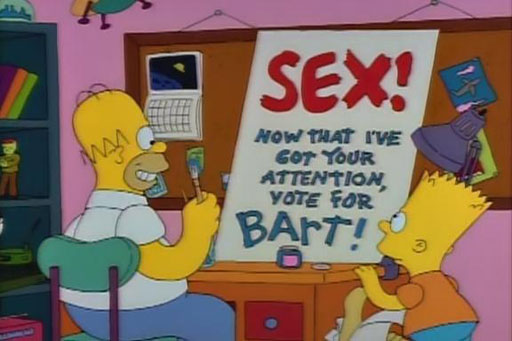
When making a product for the creative market, there are four stages that you most likely will undergo. To speak about these four stages, the product I have decided to work with is the current feature film the company I am working at is shooting now (illustrated with images from The Simpsons.)

As I have not experienced anything past the production stages of the film so far, there will always be room to update this post as things progress.

PRODUCTION

Firstly, you have the production itself, which includes the following:

PRE-PRODUCTION

This can range from writing the script to crewing up. Pre-production is considered the most difficult task in making a film, as if you are not prepared or organised to the final detail, the production stage of the film can be a nightmare.

PRODUCTION
Once you have your dates, your crew, your locations and equipment - shooting begins. If everything has been organised in the pre-production stages, most of the time, the actual shoot of the film will run smoothly. It is all about preparing beforehand. 

POST PRODUCTION 

Here is when the film has been shot, the rushes are ready, and the editing begins. Editing, as we all pretty much know, can make a good film into a wonderful film (see Raging Bull, Tarantino's films, etc.) but some do take it for granted. You can have great footage for a film, but if the editing is not up to scratch, well, all of the slaving prior to getting to the post-production stage would be a massive waste.

Working at my appointed company, I have discovered the labour of love that goes into filmmaking (and the amount of time that, for someone who has won many awards and has been BAFTA nominated, still has to go through in order to make a feature.)

The film that we are currently filming has been in the development stages for the past four years – that’s right, four years.

Now, for someone who first started writing their book four years ago, and finished a year in, well, it doesn’t seem like so much time to me, but for the majority of people, four years is a ridiculously long time to be working on one stand alone project.

There are plenty of reasons for a project to be in limbo for that long (and even longer in many cases in the film industry). Money, of course, is one of the main factors. Time can be another, but for us, finding the right cast who were available when we needed to shoot was one of, if not, the most important thing (among all the other factors I have spoken about as well, since it is a low budget feature.)

Because our story is so character driven, it was important that we had the right cast who not only would people connect with when watching the film, but would be able to put bums in seats (see Audience Consumption below.)


      MARKETING & EXCHANGE

Marketing and Exchange is the stage of getting your film out there to the right ‘market’ (or in real talk – audience). Whether that is through the internet universe, or the traditional advertising posters on the underground, the more coverage you have of your film, or product, the more likely it is going to reach a wider audience and be consumed more frequently. (Again, see Audience Consumption.)


DISTRIBUTION

“The action of sharing something out among a number of recipients” is the dictionary definition of distribution. While Marketing and Exchange handles the, well, marketing side of the production – designing the campaign, i.e posters, trailers and so forth – the distribution side of filmmaking actually gets the film out there; gets the film into the places that it needs to be.

Distributing occurs in all media sectors, and in day-to-day life, really, but in the film industry, it can be from distributing your film in the medium of DVD’s to the cinema.  

As said previously in the Production and Marketing & Exchange section, distributing needs to work with what kind of audience the film is aimed at. It is pointless only playing the Inbetweeners film in Curzon cinemas because too many people are interested in the film; it isn't an underground arthouse movie.


AUDIENCE CONSUMPTION

Knowing who your target market is before you even get going on your project is vital. If you don’t know who your audience is or who you’re supposed to be aiming your product at, then how are you supposed to sell it? 

Marketing and Exchange need to know what kind of film they are trying to sell (through advertisements and posters, so they can attract the right audience) and when it comes to distribution, you need to go through the distributors who are going to get your film out to the places, the cinemas, that your audience would most likely visit (most arthouse films play in Curzon cinemas rather than somewhere like Vue for example.) 

The films that my appointed company have produced have a very gritty and urban feel to them. The film that we are working on now is the complete opposite – it’s a tearjerking, feel-good family event.

If there are viewers going into watching our film who have seen our previous back catalogue, it is important that this family vibe we are trying to pull off his blatant (whether that is through cast, the way it is shot, etc.) otherwise; you are going to lose your audience instantly. 

To make a family film, it is of strict importance that it is accessible. When we get round to the marketing and distribution stages of our film, working with this 'accessabilty for all ages' is very important to the kind of market that we want to attract.

Overall, all four stages of creating a film are as important as each other. Without the audience, you will have no production, and without the marketing, there will be no distribution. All of the stages have to work with each other otherwise you will never get your film out there, let alone make your money back.

Monday, 22 August 2011

Unit 8, 1.2 "Describe cross-industry ownership in the Creative Media Industry."

Unit 8, 1.2 - "Describe cross-industry ownership in the Creative Media Industry."

There are so many companies that cross the divides of industries in the creative media sector (more so than ever, now). It seems that, in order to create a big, successful company in the 21st century, you have to, as the saying goes, "Have a finger in each pie."
 
Here are a few examples of worldwide known companies who have had more success than they could have possibly imagined just based on the decision to not pigeon hole themselves into a certain industry:


The BBC, many years back, were mostly known worldwide for their news coverage, right? Well, now, the BBC own their own commercial subsidiary company, BBC Worldwide LTD. who have stepped into the world of publishing books (via Random House) and magazines (their most successful outlet being The Radio Times). Instead of making films for the small screen, the BBC have created another extension to their brand - BBC films. Many successful exports, both critically and commercially, have come out of BBC films including the body popping StreetDance 3D and Academy Award nominated An Education.

 
Richard Branson begun his venture into business in the late 70s with a record shop he named Virgin. When Branson launched Virgin Records off the back of the success he had with his record shop, it went global. 

Now, years later, Virgin Group are one of the biggest and most recognisable brands going, consisting of more than 400 companies world wide.

From travel (Virgin Airlines), to their own gaming line (Virgin Games), Richard Branson has managed to field a goldmine with so many industries all connected to one company. Films, Music, Technology - Virgin has everything and anything in its brand that is remotely technological (or money making.)


It is near impossible to come across someone who hasn't heard of Universal Studios or Universal Music. Subsidiaries of NBCUniversal, both Universal Studios and Universal Music are two of the most successful branches of a company in their chosen field in the world.

NBCUniversial have not only concurred the music and film industries, but they dominate American television, and even have their own resort park.

So there you have it, three worldwide known companies who, after venturing away from their original target industries (whether that be in TV for BBC or music for Virgin), have made globally known brands that continue to dominate the creative media industry.