About Me

My photo
A college created blog that shall follow all the courses I undertake on my apprenticeship. Comical, and terribly cringe-worthy mishaps are inevitable.

Thursday, 3 November 2011

Unit 2, 1.1 "Describe several communication techniques and their appropriate application."

Unit 2, 1.1 "Describe several communication techniques and their appropriate application."


There are many techniques you can use when it comes to communication, more so than ever now thanks to this 21st Century technology boom. 


I am going to describe certain communication techniques and their appropriate application,  through the use of technological tools that I and a lot of people use.
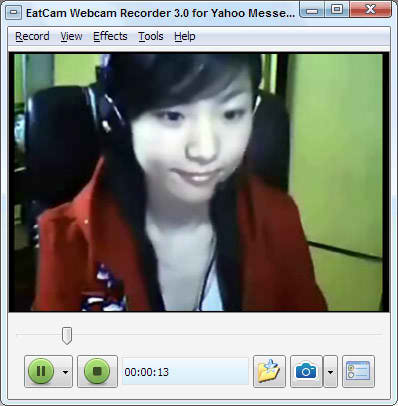

Someone on a webcam 
Webcam: 


While 'webcaming' may be used for websites such as Chatroulette, Omegle and other talking-to-random-stranger sites, webcams have become a very useful tool in communication. 


When talking about his company, Livenation, Jemel mentioned that he and his team use Skype frequently to communicate with one another. 


Appropriately applying the webcam in a conversation is very simple. Webcams are used when you are in a completely different place from someone. If you need to show a work colleague something, for example, and they are abroad, using a webcam is the quickest way to get in contact with them and present what you need to.


Faxing:


Faxing is a communication technique that is still practiced today. Yes, it seems like no one faxes anything through anymore, but it does still happen. Though scanners have made it a lot more easier to send anything over to someone that doesn't have a fax machine, in an office environment, faxing is still a day-to-day necessity. 


Like webcams, appropriately applying the use of a fax machine when needed is pretty simple. Companies are particularly heavy on faxing rather than scanning, so if asked to fax something through from someone it would usually mean that A) It's easier for them to get the document or B) They don't have a scanner. 


Emailing: 


Apart from when I didn't have a working computer/laptop at work (and even then I was still on my phone), I can't remember a time at work when I hadn't at least sent out one email during the day.


Emailing has become such a basic part of life, that it's hard to imagine what it was like without it. I first started using the internet when I was 8, thus having my first ever AOL account, too. That's more than half of my life with the internet around, and it does take me a while to remember what it was like without it.


Depending on who you are speaking to, the appropriate application of emailing can vary. If it is a colleague that you are fairly familiar with, and likes a good joke, then it can be a little more informal (unless you're talking about something extremely seriously). Most of the time, you'll be communicating with someone you are not familiar with, so it is always good to keep a formal, but inviting tone, when it comes to the style of your emails. 


Texting: 


Applying texting in day-to-day life is pretty much the same as when emailing. It all depends on what the situation is, who you are speaking to, and so on. Some texts may start out like an email (Hi Sarah), while other texts may ignore those emailing basics, and just go straight into what the person sending the text is trying to say. When texting, a lot of the time, acronyms such as LOL (laughing out loud), WTH (what the hell), and TBH (to be honest) are used, whereas in most emails, people stick to straight-forward English vocabulary. 


Instant Messaging: 


I mentioned in the webcam section of this post about sites such as Chatroulette and Omegle. For those kind of websites, they are mostly used to joke around, rarely does anyone take them seriously. 


Skype is another instant messaging service I named. Unlike Chatroulette and Omegle, you need an account on Skype to speak to people. You would add contacts on Skype in the way you'd add them on your phone, or on Facebook. 


Speaking of Facebook, Facebook Chat is another widely used instant messaging application used. It is a lot more simple than the likes of Skype, as it reads more as a text message than anything else, and, in my experience at work, you would rarely - if ever - speak to colleagues on Facebook's chatting system, it is more a friend based tool.  


Overall, it all depends on whom you are speaking to, what the situation is (whether it is serious or not), and so on, when it comes to applying these communication techniques appropriately. 

Unit 1, 1.3 "Explain the main implications of each employment status in relation to jobs security, flexibility and working patterns."

Unit 1, 1.3 - "Explain the main implications of each employment status in relation to job security, flexibility and working patterns."

The employment statuses in the Creative Media sector that I have spoken about in Unit 1, 1.1 all have their own perks when it comes to job security, flexibility and working patterns. But with perks also comes the lowlights. Here, I am going to explain the main implications of job security, flexibility and working patterns for each employment status.

Full-time/Part-time:

Job security - Out of all the types of employment, full-time/part-time employment has the most job security, especially when it comes to contracts. Usually, you will sign a 12 month contract for a job, and, considering that most of the other employment statuses within the creative industry are for a certain, short period of time, being a full-time/part-time employee is the best option when it comes to security within your job. 
Flexibility - Flexibility, as I will speak about in the working patterns, is all dependent on what is in your contract. If your working hours are 9 - 5, with extra hours needed to be put in on some days, there is little room to be flexible in your job. It can depend on your employer, though. Some employees may be a lot more flexible to time off/holidays and so forth, while others may be more strict and require a certain amount of time for you to let them know when you would like to book annual leave, and if you will be able to get that holiday.

Working patterns - Your working patterns are very regimented when it comes to full-time/part-time work. You have signed a contract which requires you to work a certain amount of hours, though it isn't common in the creative industry to have to work later than your typical 9 to 5 job. 

Contracted employee:

Job security - Unlike being a full-time or part-time employee, as someone who is self-employed, your job security depends on yourself, really (as you are your own employee). When 

Flexibility - Being a contracted employee, unlike another employment status I am going to speak about below, you are required to be on a job for a certain amount of time, and usually, this would mean that you don't have the flexibility to do jobs on the side.

Working patterns - Your working patterns are very scattered if you're a contracted employee. Because there may not be any jobs going around at a certain time, it all matters when the work comes your way. It isn't common for the self-employed to be out of work for weeks, even months. 

Freelancer:

Job security - Again, a freelancer is self-employed, so your job security (when it comes to employing yourself) is fine, but on an actual job you are being paid for, because you'll be selling your services or a product, this will only last a certain amount 

Flexibility - You have the most flexibility out of all the employment statuses on the list (while getting paid) because you can work on more than one job at a time, which freelancers, due to money and other commitments, do. 

Working for yourself also gives you a lot more flexibility than you usually would if you were holding out a 9 - 5 job. You are your own boss, so as long as you're paying your way, you can pretty much do anything you want.

Working patterns - Working patterns are, again, very scattered, just like being a contracted employee. You don't know when the work will come round that you would put yourself forward too, and when work does come round, you have to grab it as quickly as you can. 

Volunteering/work experience/intern (unpaid):

Job security - Your job security as either one of the employees under this header is very much like being self-employed. You have job security when it comes to being your own boss, but on a specific job you are doing, it'll be for a very short period of time (particularly volunteering).

Flexibility - Like freelancing, you have a lot of flexibility as a volunteer/intern or someone carrying out work experience. The worst thing about it is though, while you're gaining more experience by the day, freelancers get paid. 

Working patterns - Another employment status where the working patterns are up-and-down. When it comes to volunteering/interning/work experience, there are indeed more jobs to go around at times because there isn't a pay cheque at the end of the day. 

Apprentice/Intern: 

Job security - Your job security is closest to being a full-time/part-time employee as you are signed up to a contract of 10 months as an apprentice. For interns (this goes for paid ones), the contract may be for a shorter time. 

Flexibility - Flexibility wise, as said about full-time/part-time employees, you will be required to work a number of hours that is listed in your contract, and maybe more if it is required of you. Because being an apprentice and a paid intern is more closer to being a full-time/part-time employee as you're doing a lot of the same work they would do, you are treated like one, too. You may end up with an employee who is more relaxed to holiday/time off, as I mentioned about full-time/part-time work. Others may not be so lenient.

Working Patterns - Working patterns for an apprentice would be from Monday to Thursday, with college on Friday (that is for me, anyway). It is very much like having a full-time job as the hours that I work are those that someone in full-time employment would (long hours!) with a college day on the side. As for interns, they are seen as being full-time/part-time employees too, so depending on what has been signed in their contract, they will be required to be in for 5 days a week if that was the deal that had been made. 


Bear in mind, though, some employers don't all follow these rules. There can be employers, as I mentioned, that are a lot more relaxed and easy going then others, and may not follow your typical 9 -5 rules.

Wednesday, 2 November 2011

Unit 1, 1.2 "Describe the key legal and taxation differences between main types of employment status."

Unit 1, 1.2 "Describe the key legal and taxation differences between main types of employment."


With the different type of employment statues that you have (described in Unit 1, 1.1), when it comes to the legal side of things (i.e pay), there are many differences for all those types of employees I spoke about before. 


Here are the following descriptions of these differences:


Full-time/ part-time employee: As a full-time or part-time employee, you are required to pay income tax, which is dependent on how much you earn a year. If your yearly income is more than £7,745  you will have to pay tax. Your employer will work out how much tax needs to be deducted - dependent on this income - using your HM Revenue and Customs tax code. 


Contracted employee/Freelancer: Being self-employed is very different to being a full-time employee. One of the major differences is that you have to pay your own tax and national insurance income, something that your employer would do. 


If you set up a limited company, this is another legal and taxation difference from the other types of employments I have spoken about.


As a limited company, you are seen as a person, so, like you would do if you were just freelancing yourself, to get paid, you send out invoices to whoever you worked for.


One of the main differences between a limited company and someone who is working full-time/part-time or is a contracted/freelance employee, is that, instead of paying income tax, you pay corporation tax. 


Unpaid worker: If you are working on a voluntary basis  you're not getting paid, and therefore won't need to pay tax or national insurance. 


Apprentice/Intern (if paid): As an apprentice, because I am earning under the minimum taxable yearly wage, I don't need to pay any tax/national insurance. The same would go for internships that are paid, as most likely, the said intern wouldn't be earning more than £7,745.

Unit 1, 1.1 "Describe the main types of employment status within the Creative Media sector."

Unit 1, 1.1 "Describe the main types of employment status within the Creative Media sector."


There are a few types of employment statuses in the Creative Media sector, which I have listed below:


Firstly, you have full-time employees. There are a lot of roles in the creative industry that require permanent employees, some of which are not just office-based. For example, Jemel's company, Livenation, have full-time employees that work solely on design, while Edun's company, Studio Canal, have those based in different parts of the distribution sector. Saying that, part-time employees fall under the same category as full-time employees, the major difference being that they don't work five days a week.


Next is the contracted-employees. Contracted employees have a specific amount of time they will work on a project/at a place. This type of employment can be seen when a production of a film is taking place. I, for one, have come across many contracts where a fair few people have been employed for a specific amount of time (usually referred to as weekly contracts). With this type of employment, unlike the one I am going to speak about below, usually, you will only be able to work on one specific project at a time. 

Freelancing is another common type of employment in the creative industry. As a freelancer you are selling a product that you supply, whether that be your make-up services, something you have made etc. Most people, as with contracts, work in this way because there aren't many full-time jobs that let you deal with the creative side of the industry as much. Freelancers also have the freedom to work on other projects, not just one in a way that a contracted employee would. 


Unpaid work is very common in the creative industry. As the old saying goes, "The more experience, the better" there are many people that will go without pay when it comes to getting a good job. These people can fall under either being volunteers, where they have signed up for a job under the guise as a volunteer (mostly applied to when it comes to charities) or as interns who are usually taken on when a helping hand is needed, sometimes for a few weeks, in other cases, a few months. Interning is similar to having an extended time of work experience, which is for much shorter type than internships are. In some cases, interns do get paid, but very rarely. 


Lastly, the type of employee that I am at the moment (an apprentice) is also another employment status out there - apprenticeships.


Apprenticeships don't fit under contracted work because, while working, you will also be studying for a qualification. Nor does it fall under unpaid work, because there is a pay cheque each month. As an apprentice, you are learning all the on-the-job experience that someone doing an internship would, but you are getting paid for it, too. 


There is also room for people to swap and change from these kinds of employment, too. Some people may be volunteering while also working as a freelancer or a contracted employee may be getting in freelancer jobs as well.


These kinds of employment statuses aren't just centered around the creative media industry, either. Lots of other industries outside of the creative sector have different types of employment that fall under the ones that I have covered. 


Unit 1, 2.1 "Describe a range of prospective employers and the profiles and products of these employers" and 2.2 "Explain how to choose an employer in terms of personal interests, knowledge, skills and job requirements."

Unit 1, 2.1  "Describe a range of prospective employers and the profiles and products of these employers."

     We all have the perfect, ideal job that we would (probably) kill for. When it comes to the 'perfect' job, for me, a lot of them center around being a staff writer for magazines. I am a big magazine reader, more so than anyone that I know, so being in that kind of environment would really benefit me, I think. 

     Here is a list of prospective employers that I would love to work for (though it probably won't ever happen, but here's hoping!).
     
     Employer: Little White Lies

     What they do: First published in 2005, Little White Lies is a bi-monthly film magazine. They focus on all new cinematic-releases, dedicating each issue to a particular film that is coming out (as can be seen on the image on the left hand side).
     
     Ideal position: Staff writer

     Though, over the past few months, I have locked more onto writing as a whole rather than considering writing for film, I still love writing about film, and Little White Lies, though I do disagree with them sometimes, would be a great place for me to grow as a writer. The style they incorporate is laid back and very casual (unlike Sight and Sound) which is something I am much more in-tune with than over analytic essay-writing.  

     Employer: iD magazine

     What they do: Former Vogue art director Terry Jones founded iD magazine in the 1980s. Their more fashion and photography-focused than other less-mainstream fashion magazines, but do delve into the other arts, too. 

    Ideal position: Staff writer

    After dropping out of college, I ended up spending a lot of time to myself as everyone that I knew actually had lives to lead, unlike my job-less one. This was the time when I discovered a lot of things (especially film), and was also the moment when iD and Dazed & Confused entered my life.
     I've always had an interest in fashion (though I never dress like it, I just can't be bothered most of the time), and, at 16, fashion magazines started playing a major part in my monthly readings. I never got into the likes of Vogue or Elle, mainly because they dealt more with the celebrity side of things than I care to mention. iD is a great magazine for me because, on most occasions, they celebrate fashion that I actually like (!!) with top-notch photography, and when they do write-ups on musicians, artists, films, books or art exhibitions, my interest is always peeked. 

     Employer: Myself 

     Ideal position: Freelance writer 

     I think everyone daydreams of throwing in the towel to the working world, and becoming their own boss. Yes, freelancing is very tight rope to walk - you don't know when you'll get a job coming your way, and most likely, the pay won't be very good. Still, freelancing is where I think I would progress the most. Being given a writing task to do, and going about and doing it (with a time limit, of course).

     If I have to pick an employer that isn't myself, though, the last place of work I have listed below is THE dream job. 
       
E   Employer: Dazed & Confused
      
     What they do: Founded by now-infamous photographer Rankin, and journalist Jefferson Hack, Dazed & Confused originally started as an independent zine publication, before gaining notoriety around the London club scene. Now, Dazed & Confused is a monthly magazine publication, who focus on all-things art, particularly fashion.

I    Ideal position: Staff writer film/books

I    I've spoken a fair few times about Dazed & Confused on this blog already, so I think you get the gist that I love the magazine. It embodies everything that I love about art as a whole, not just fashion. I've discovered so many films, designers, artists, musicians, and books thanks to the magazine, and out of all the employers I have listed (minus myself, of course!) to work for them would really be a dream-come-true type of moment. 

     I'm also going to mention a magazine that I wish was around as, though I am now technically an adult, teenage issues are, unfortunately, something that still annoyingly concern me. 

     Employer: Sassy

     What they did: Sassy, formed in the late 80s, were a completely different alternative to the Seventeen-type teenage magazines around at the time. They spoke honestly about drugs, sex, relationships, school, life; everything that concerned teenage girls, really.

     Ideal position: Staff writer

     I am a big advocate for equality in all it's forms, and something that really bugs me nowadays is the lack of concern there is for people my age, ones who can be easily swayed by what they see/read. Sassy was a magazine before my time (well, I was alive when it was out, but I was way too young to read it) that approached teenage life with a DIY attitude, which I loved. 
     
     There are two sites up-and-running now that have been coined as the 21st Century Sassy's (Hardly Magazine and ROOKIE), I just wish they were both in print!

     There are many more places that I would definitely mesh well with when it comes to working as a writer. Most, as you can see from the list I made, all have to do with magazines, but, to me, it doesn't matter. As said, I am a big magazine-reader, and all the magazines I have listed above are completely different from each other, though they may cross over in terms of the arts. It's easy to forget that everywhere you work is going to be different from the last working environment you were in!
     

     Unit 1, 2.2 "Explain how to choose an employer in terms of personal interests, knowledge, skills and job requirements."

    It is important to go by what you have experience in, and what you believe you need experience in when it comes to finding jobs. Yes, of course you can get a job that you have no experience in whatsoever (that’s how you start building up on the career ladder), but the likelihood of that, especially in this working climate, is next-to-none.

    
     We’d all like to find a job that we are going to love, but again, just as it is very unlikely to get a job we have no experience in, it will also be a mission to find a jo that we 100% truly love.
     
     Personal interest wise, you may not be able to throw yourself into the deep end and get the perfect job you want. In terms of the industry you’d like to get involved with, usually, you will have to put your blood, sweat and tears into getting that ideal job (unless you’re best friends with Harvey Weinstein.)
       
     Knowledge is also another thing that you have to consider when choosing jobs. Are you knowledgeable in a certain area that few others are? Is there something that you think you could learn more about? These are things we all need to think about when it comes to job searching.
      
    Just as our knowledge in a certain area can be valuable to prospective employers, so are our skills too. If you have a skill that very few others have, this can be a highlight to your application.
    
     When it comes to the actual job requirements, there is no point in applying for a job that requires something that you don’t have, for example you could be asked to have two years’ experience in administration. If you don’t have that experience, then there is no point in applying for the job because they are looking for someone specifically. 

Tuesday, 1 November 2011

Unit 2, 1.3 "Describe how to give and receive constructive feedback."

 Unit 2, 1.3 – Describe how to give and receive constructive feedback
 Giving and receiving constructive feedback is very important in whatever you do no matter if it is in a job or not. While you can help others with their own performance by saying what you think they are working well on and the areas where that are in need of improvement, someone can do the same for you.
To give constructive feedback all you really need to do is identify the areas that work well, and the ones that don’t and tell the person who has presented their idea to you.
When it comes to receiving feedback, it is always good to take on what someone has said about you and your work on board, even if you don’t agree with it.  Having another opinion minus our own on our work helps a considerable amount with getting an end product that is much better than it was without that feedback.
I have linked two examples of giving, and receiving feedback, but done in a manner that I is both constructive, but highlights the positives. 
Joy has given feedback on one of my units here.
While I have given feedback on three other apprentices in the group, including Joy, here.  

Unit 8, 1.3 " Explain the relevant relationships between a range of Creative Media industries"

Three of the apprentices in the group have spoken about their chosen industries in regards to Unit 8 where we had to select two Creative Media sectors within the media industry and compare the two. After reading three of these sector comparisons, I have made my comments on them below. 

Gaming and the Internet: Robert 


Gaming wise, as I had mentioned in my own post about the literary industry, there are so many gaming magazines for all sorts of consoles - from Xbox 360 to PC. Without gaming being as popular as it is, there would be no need to have so many console related magazines.


As Robert has a lot of knowledge of games, he has spoken in detail about the way that we play games now and how we used to play games. 


One thing that he has failed to touch up on in his summary of the gaming industry is the non-technology type of gaming - board games. Board games, once upon a time, used to be the household activity of the night, but now, consoles such as Wii have made gaming accessible to everyone because Wii games don't require any gaming skills per se, they are something everyone can pick up.


The internet is such a wide resource, one that you couldn't possibly talk about in a nutshell, really.


Robert has spoken about the internet through gaming, journalism and film - internet gaming, the fact that we now have a journalistic voice and films based on games -, but one industry I have spoken about that he hasn't touched is the TV industry.


The internet has a massive impact on the way that we watch television now, (as I have shown in my own post) and streaming wise, this has had a backlash on the way we view films, not just television, too.


The other industry I had chosen that Robert didn't touch upon is the literary industry. Now, we can view magazines online, we have eBooks that we download, and so forth. This could be something that Robert could speak about in the future, if he were to review this post again.


Advertising and Film: Joy 


Joy has spoken, in detail, a lot about advertising and - something which I am very much in-tune with - the morals of these. She has also demonstrated that she understands the basic structure of the film industry with the flow chart that she provided, explaining about the transition in technology when it comes to film (how, over the last hundred years, we now have sound/colour/HD, etc.)


The only thing that I would pick up upon on is the fact that Joy hasn't compared the two industries together, nor have any other industries been picked up upon when she spoke about her chosen topics. 


Photography and Art: Deri 


Clearly, Deri has knowledge of photography. Touching upon fashion magazines, which is something I spoke heavily about in my own post on my two Creative Media industries, Deri has delved into photography, showing that he has a considerable amount of know-how on the subject (whether that be fashion or photojournalistic photography.)


However, he has only briefly spoken about the Art industry (though I think Photography, Film, Music etc. all land in the Art industries overlap). This is something I think would benefit from more extensive research and writing on the subject. 


To back up his opinions, Deri should also supply references to what he is speaking about as this would help to create a valid argument if they are trusty references. Though it is great to have your own opinions in there, facts, particularly when speaking about industries that do rely so much on statistics, are of utmost importance. He does mention that 14% of American's can't read, but how are we supposed to know this without a direct reference to it?


Overall, everyone did a good job of comparing their chosen sectors, but the main point that I will bring up for all three of the apprentices would be the lack of comparisons to other industries. Though out of Deri and Joy, Robert compared the most industries, he missed out a vital one that I spoke about (TV) in his essay.